

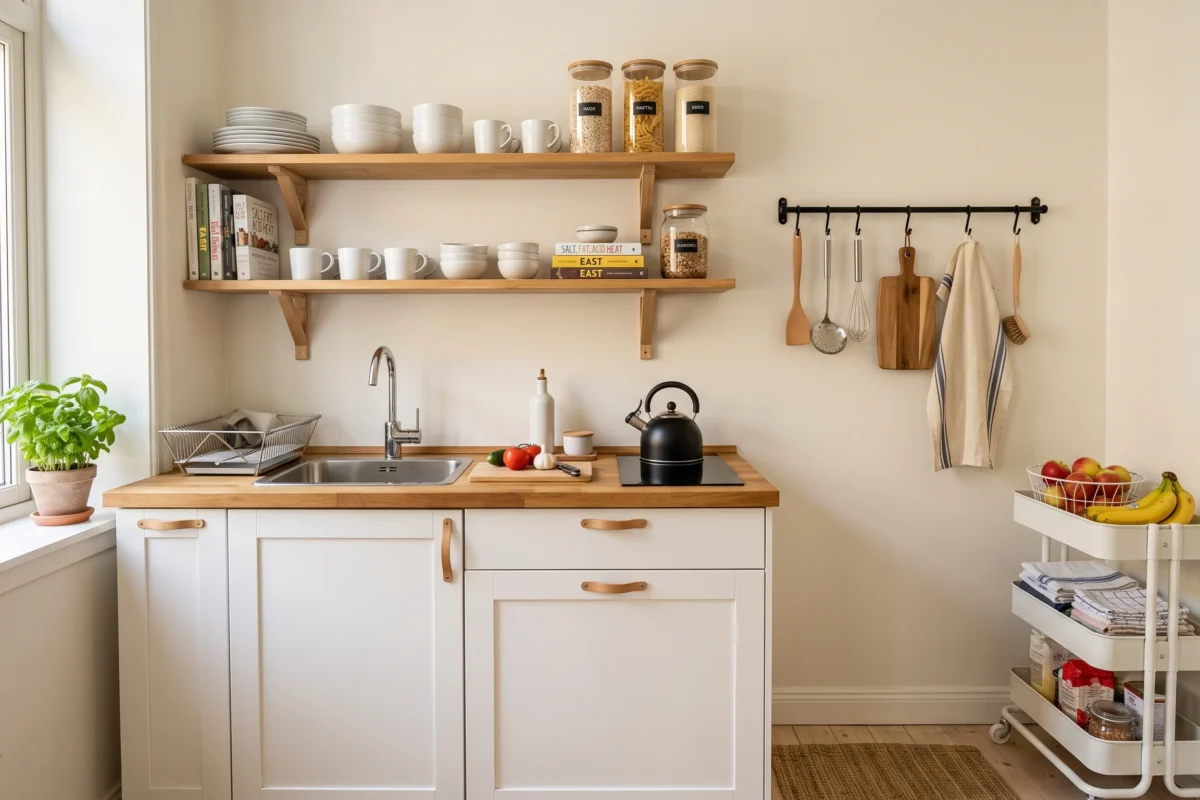
If your kitchen has almost no cabinets, you already know the daily struggle. Pots end up stacked on the stove. Spices sit in a plastic bag in a drawer. Every counter inch is doing three jobs at once.
This is common in older rentals, studio apartments, and tiny galley kitchens. The good news is that a lack of cabinets does not mean a lack of storage. It just means you need to think about your walls, your counters, and the empty air above your appliances instead of built-in cupboards.
This article walks through ten practical, renter-friendly ways to store dishes, food, pots, and small kitchen items without spending a lot of money or touching a drill. Each idea includes how it works, why it helps, and how to actually set it up in a small space.
Quick answer: The most effective small kitchen storage ideas without cabinets are open shelving, wall-mounted rails with hooks, pegboards, rolling carts, over-the-door organizers, and stackable bins. Together, these use vertical wall space and unused corners instead of relying on built-in cabinets, and most options are removable, making them ideal for renters.
1. Add Open Shelving on an Empty Wall
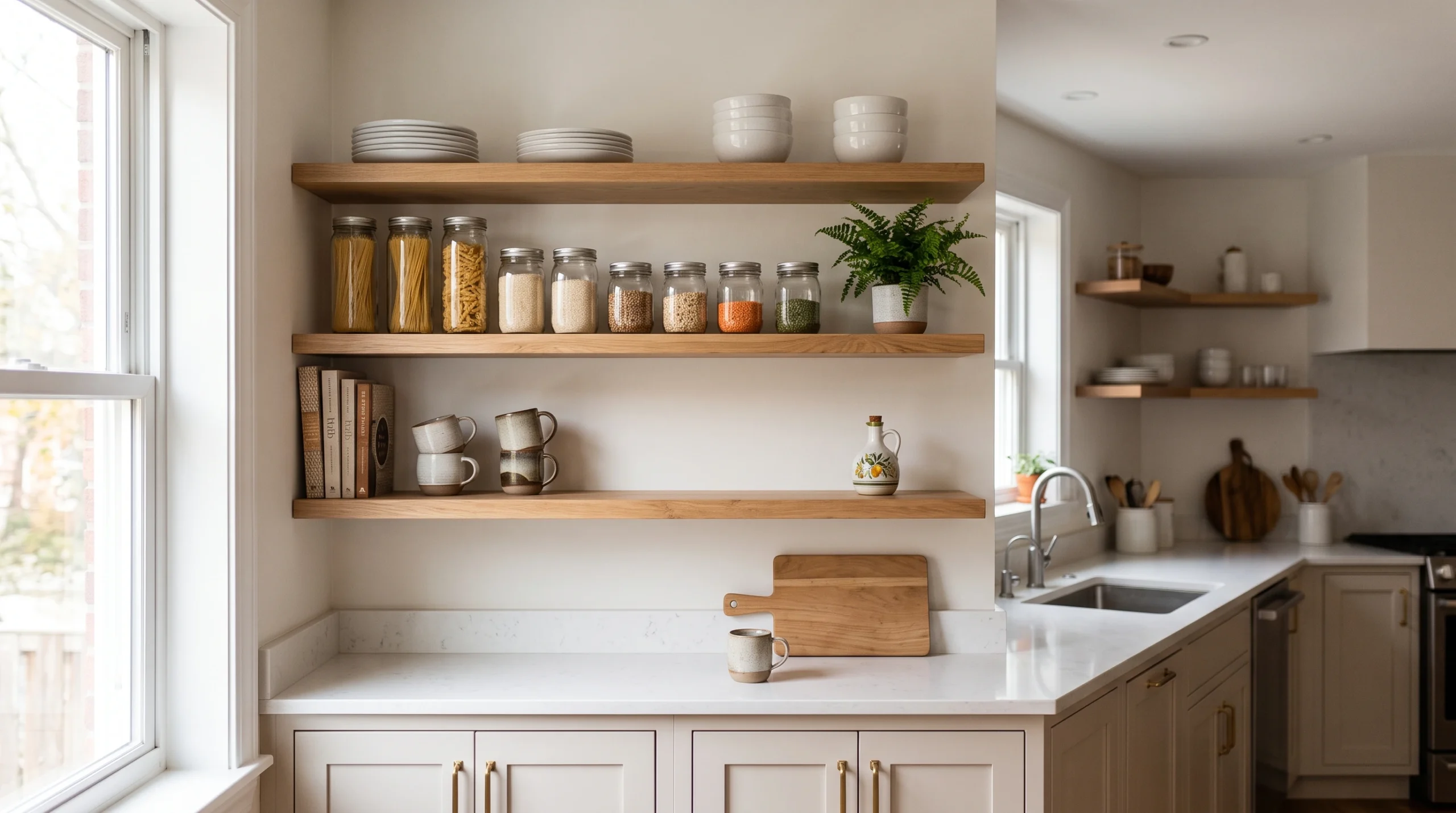
Open shelves are one of the simplest ways to add real storage to a kitchen with no cabinets. A single wall can hold three or four shelves, which is often more usable space than one small cabinet would give you.
This works because it takes advantage of vertical space that is usually left empty. Most kitchens have at least one wall between the counter and the ceiling that is doing nothing. Turning that wall into storage instantly gives you room for plates, mugs, jars, and cookbooks.
Renter-Friendly Way to Do It
For renters, look for shelving brackets that use small screws in drywall anchors rather than heavy-duty masonry bolts, since these leave minimal damage. If drilling is not allowed at all, there are heavy-duty adhesive shelf brackets designed to hold light kitchen items like mugs or spice jars, though they work best for lighter loads rather than a full stack of dinner plates.
Keep the shelves organized by grouping similar items together, like all your glasses on one shelf and plates on another. This keeps the wall looking tidy instead of cluttered, which also makes it a nice visual moment if you like to photograph your space.
2. Use Floating Shelves for a Clean, Modern Look
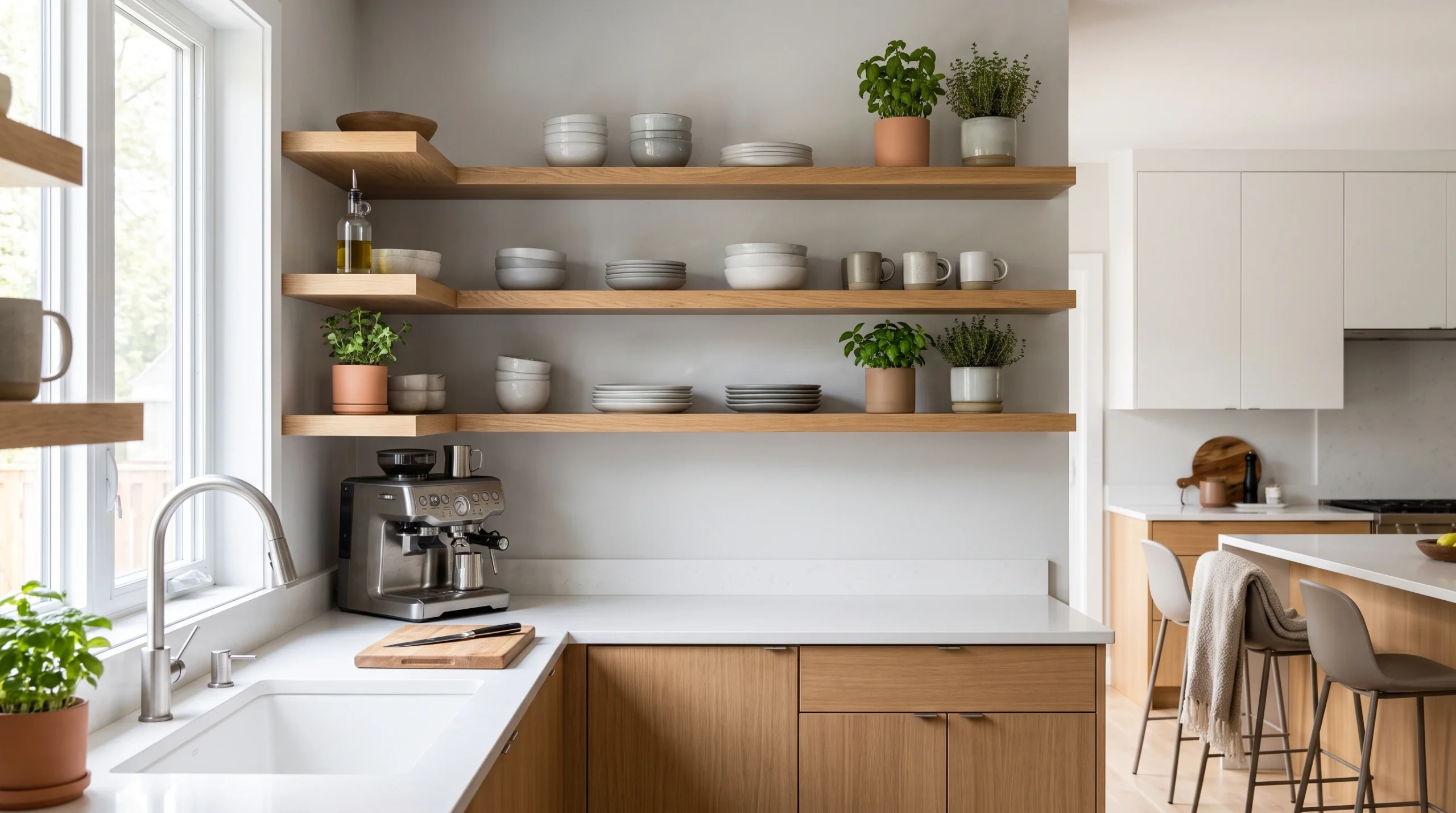
Floating shelves are a specific type of open shelf that appear to have no visible brackets, which gives a kitchen a cleaner look than traditional bracket shelving. This is more of a style choice than a functional difference, but it matters if you care about how the kitchen looks day to day.
These shelves work well above a counter, next to a window, or above a small kitchen cart. Because they sit close to the wall, they do not take up much depth, which is helpful in a narrow galley kitchen.
If you rent and cannot drill into the wall, look for floating shelf systems made for renters that use strong adhesive strips instead of screws. These typically support lighter items like small potted herbs, spice jars, or a few bowls, rather than heavy stacks of ceramic dishes.
A common mistake is overloading floating shelves. Since they have less visible support than bracket shelves, it is smart to check the weight limit before stacking heavy stoneware or a large collection of jars.
3. Install a Pegboard for Pots, Utensils, and Tools
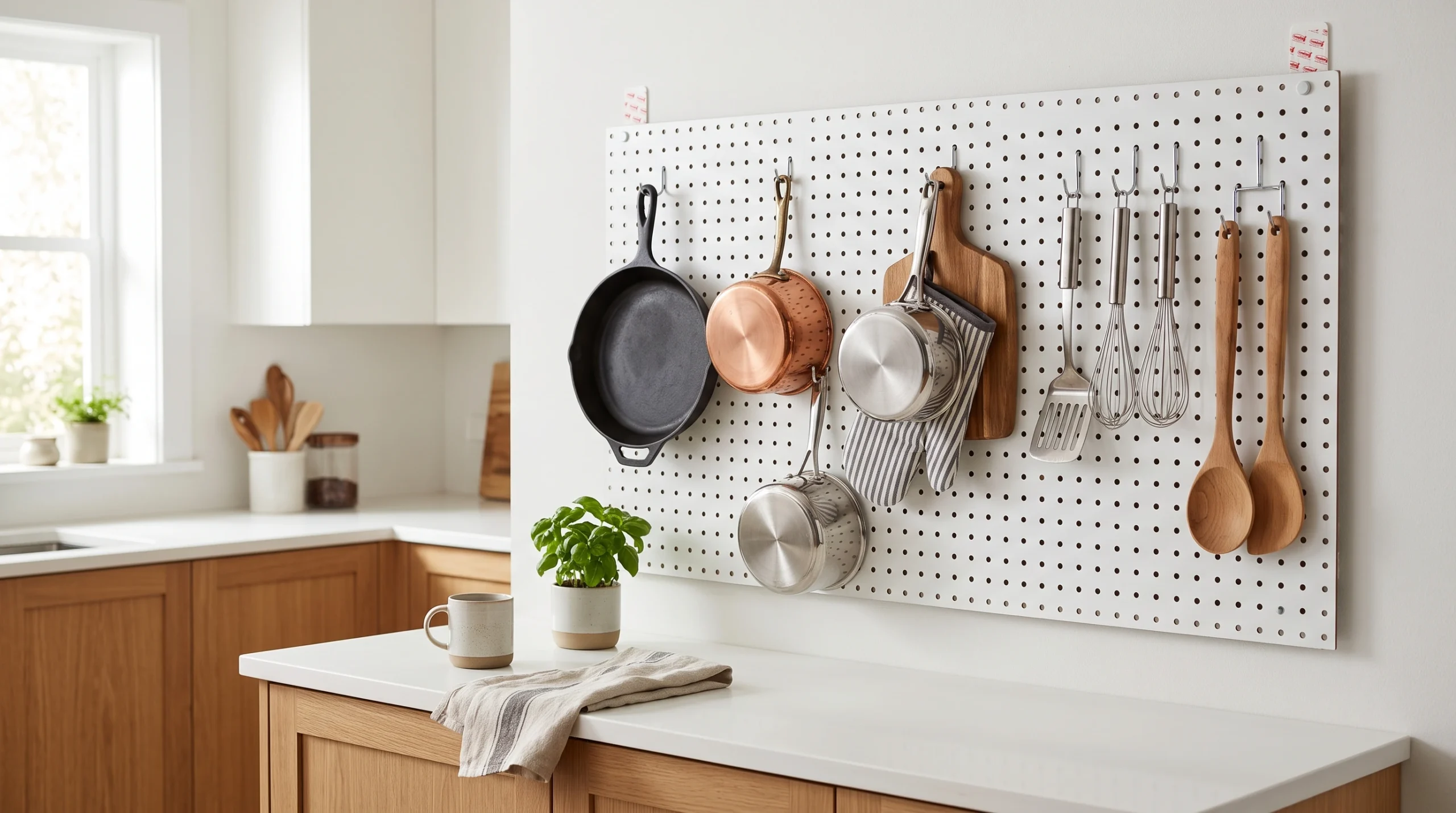
A pegboard is a board with small holes that let you hang hooks wherever you need them. In a kitchen, this means you can hang pots, pans, oven mitts, cutting boards, and cooking utensils directly on the wall instead of storing them in a cabinet you do not have.
This idea works especially well above a stove or next to a prep counter, since it keeps your most-used tools within arm’s reach. Instead of digging through a drawer for a spatula, it hangs right where you can see it.
For a renter-friendly version, choose a pegboard that comes pre-mounted on a frame you can lean against the wall or attach with a few small screws in one central spot, rather than one that needs multiple holes across a large surface. Some pegboards are also small enough to hang from a single command hook rated for heavier loads.
Because everything is visible, a pegboard also helps you see what you actually own. This can prevent the common problem of buying duplicate kitchen tools because you forgot what was already stored away.
4. Add a Wall Rail With S-Hooks
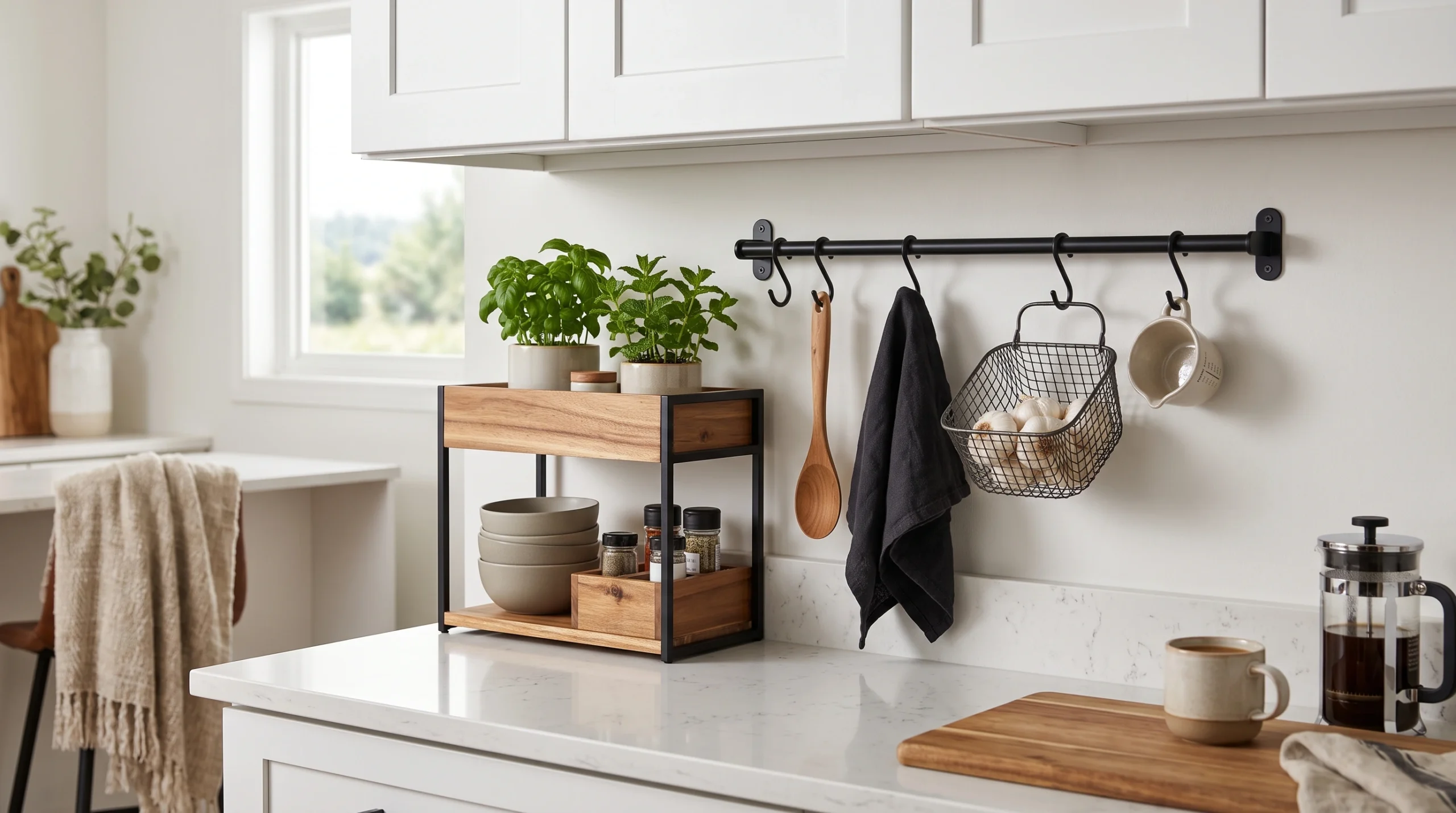
A wall rail is a thin metal or wood bar that mounts to the wall, usually with hooks that slide along it. This is one of the most flexible small-space storage tools because you can add or remove hooks depending on what you need to hang that week.
This setup is ideal for hanging mugs, measuring cups, small pots, oven mitts, or even a roll of paper towels. It uses wall space instead of counter space, which matters a lot in a small kitchen where every inch of counter is needed for actual cooking.
Look for a rail that mounts with just two or three screws, or a version designed with adhesive backing for light kitchen items. Since the rail itself takes up very little wall space, it is one of the easier renter-friendly upgrades to remove later without leaving a big mark.
Group items by how often you use them. Keep your most-used mugs and tools on hooks near eye level, and save higher spots on the rail for things you reach for less often. This same “group by frequency of use” logic works well in other rented rooms too — it’s the same idea we cover in renter-friendly bedroom storage.
5. Bring In a Rolling Kitchen Cart
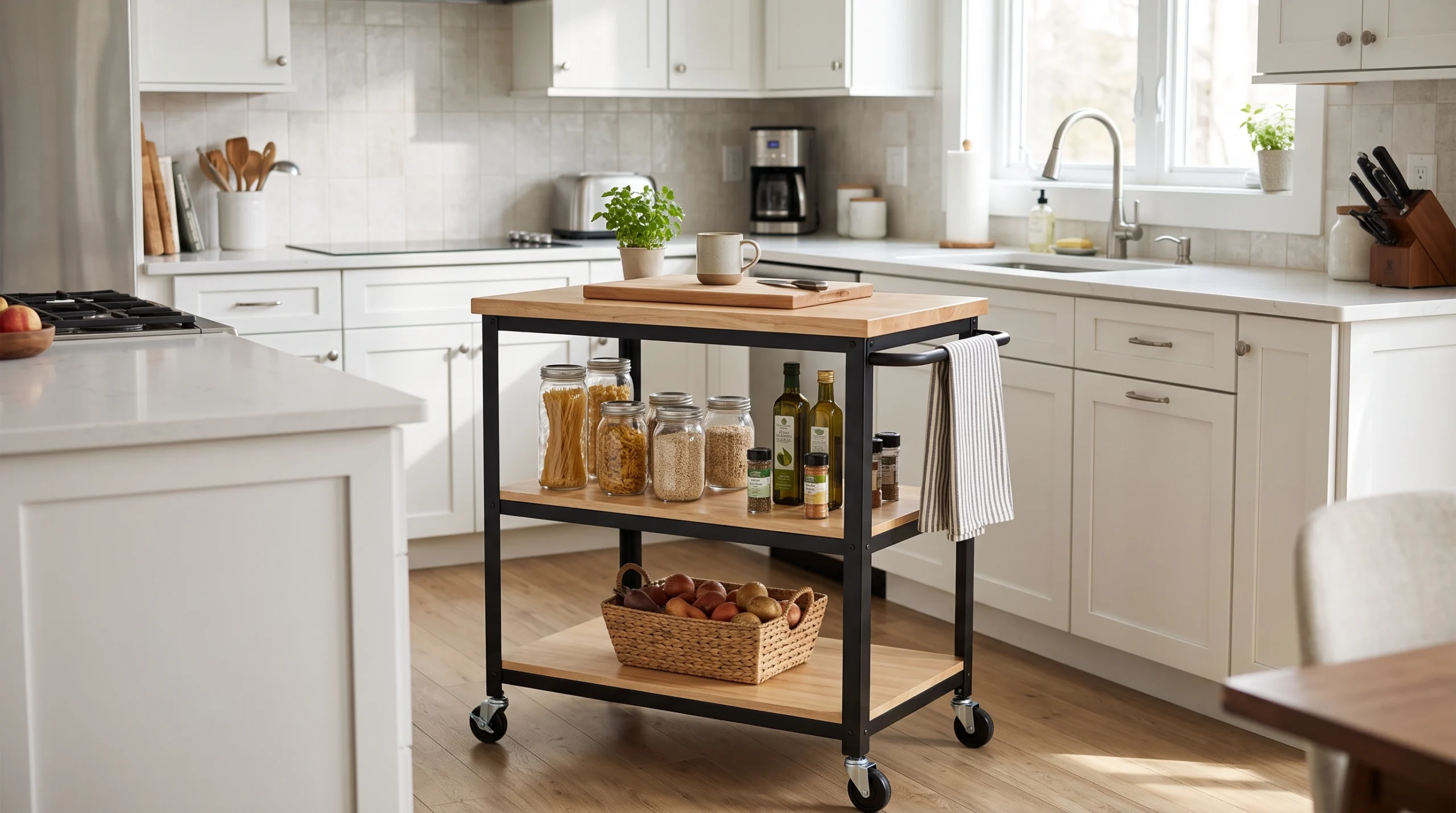
A rolling cart is a small cabinet on wheels, and it might be the single most useful piece of furniture for a kitchen with no cabinets. It works like a portable pantry, counter, and drawer unit all in one.
This idea solves several problems at once. It adds counter space if your kitchen is short on it. It gives you enclosed or open storage for dishes, small appliances, or pantry items. And because it has wheels, you can move it wherever you need extra space, or roll it out of the way when you are cooking.
For renters, a cart is one of the best investments because it moves with you. Unlike built-in storage, it is not attached to the apartment, so it becomes a permanent part of your kitchen setup no matter where you live next. If you’re furnishing a whole small apartment this way, it’s worth looking at budget-friendly storage solutions for small apartments as a next step.
Place the cart in an unused corner or at the end of a counter. Use the top for daily items like a coffee maker or cutting board, and use the shelves below for pots, small appliances, or canned goods.
6. Use Over-the-Door Organizers for Pantry Items
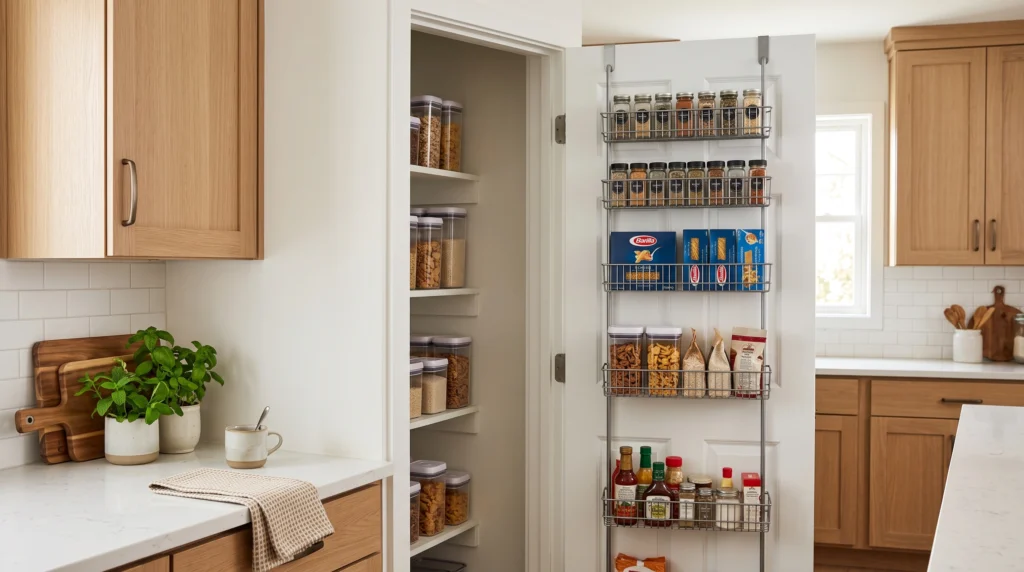
An over-the-door organizer is a hanging rack with pockets or bins that slips over the top of a door, usually a pantry door, cabinet door, or even a closet door near the kitchen. No tools are required, which makes it one of the easiest storage upgrades to set up.
This works well for canned goods, spice jars, snack bags, foil, plastic wrap, and cleaning supplies. Since most kitchens have at least one door nearby, whether it is a pantry, broom closet, or hallway closet, this uses space that would otherwise go completely unused.
Because it hangs on the door itself, this is naturally one of the most renter-friendly options on this list. Nothing touches the wall, nothing needs a screw, and it comes down in seconds if you move out.
Sort items by size, keeping small jars in the smaller top pockets and bulkier items like cereal boxes in the larger bottom sections. This keeps the organizer from becoming a jumbled mess.
7. Try Stackable Bins and Clear Containers
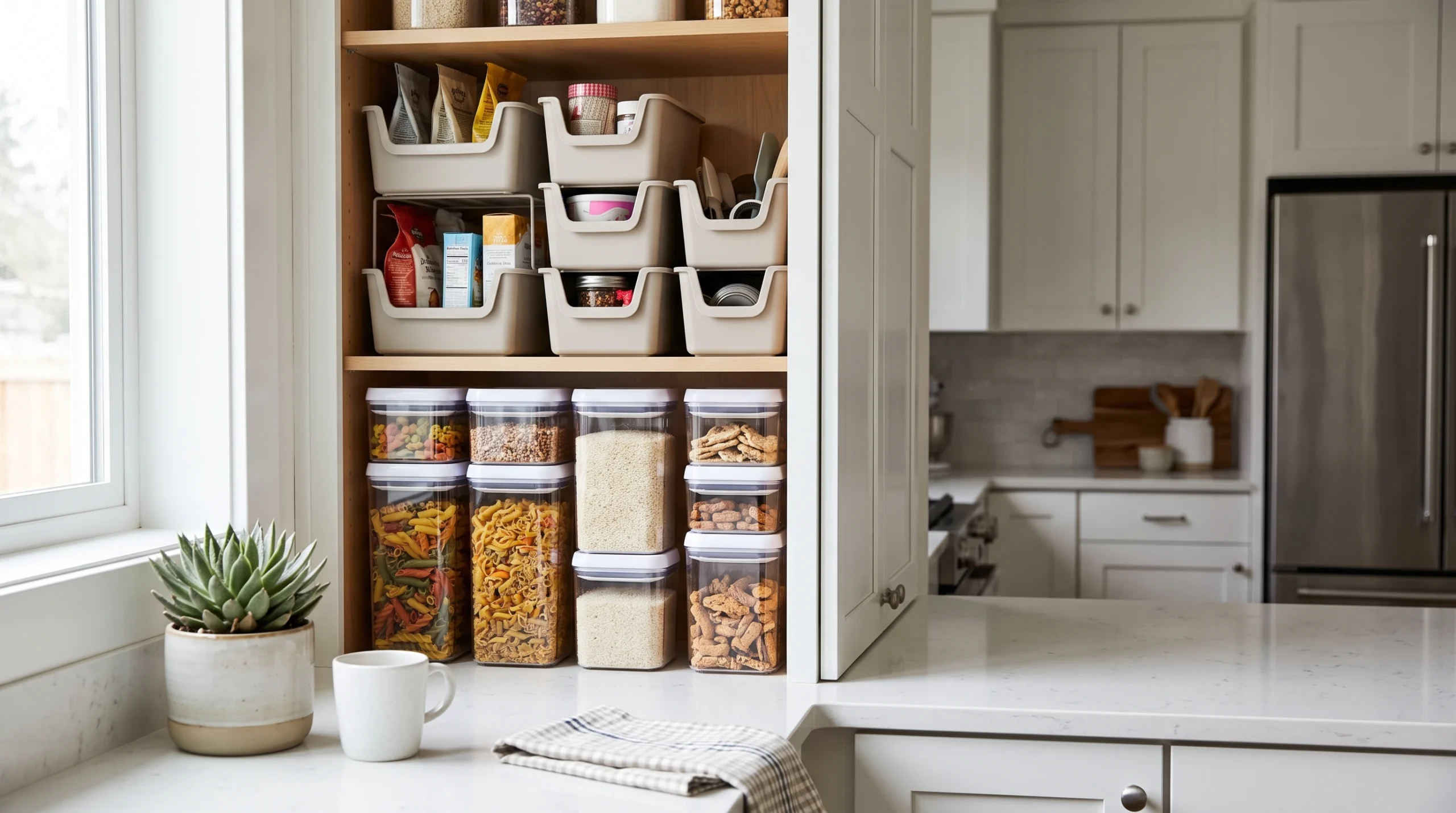
Stackable bins and clear containers help you use vertical space inside whatever storage you do have, like a small closet, a shelf, or the top of a fridge. Instead of items sitting loosely and taking up random space, bins let you stack things neatly on top of each other.
Clear containers are especially useful for dry food like pasta, rice, flour, and cereal. You can see exactly what you have and how much is left, which also helps you avoid buying duplicates. Clear containers tend to look neater on open shelving than the original packaging, which matters if your shelves are visible in the kitchen.
This is one of the more affordable ideas on this list, since bins and containers can often be found secondhand or at budget stores. It is also a fully portable solution, meaning everything moves with you to your next apartment without any setup or removal needed.
Label each container if you have several that look similar. This saves time when cooking and helps other people in your household find things without asking.
8. Hang a Magnetic Knife Strip
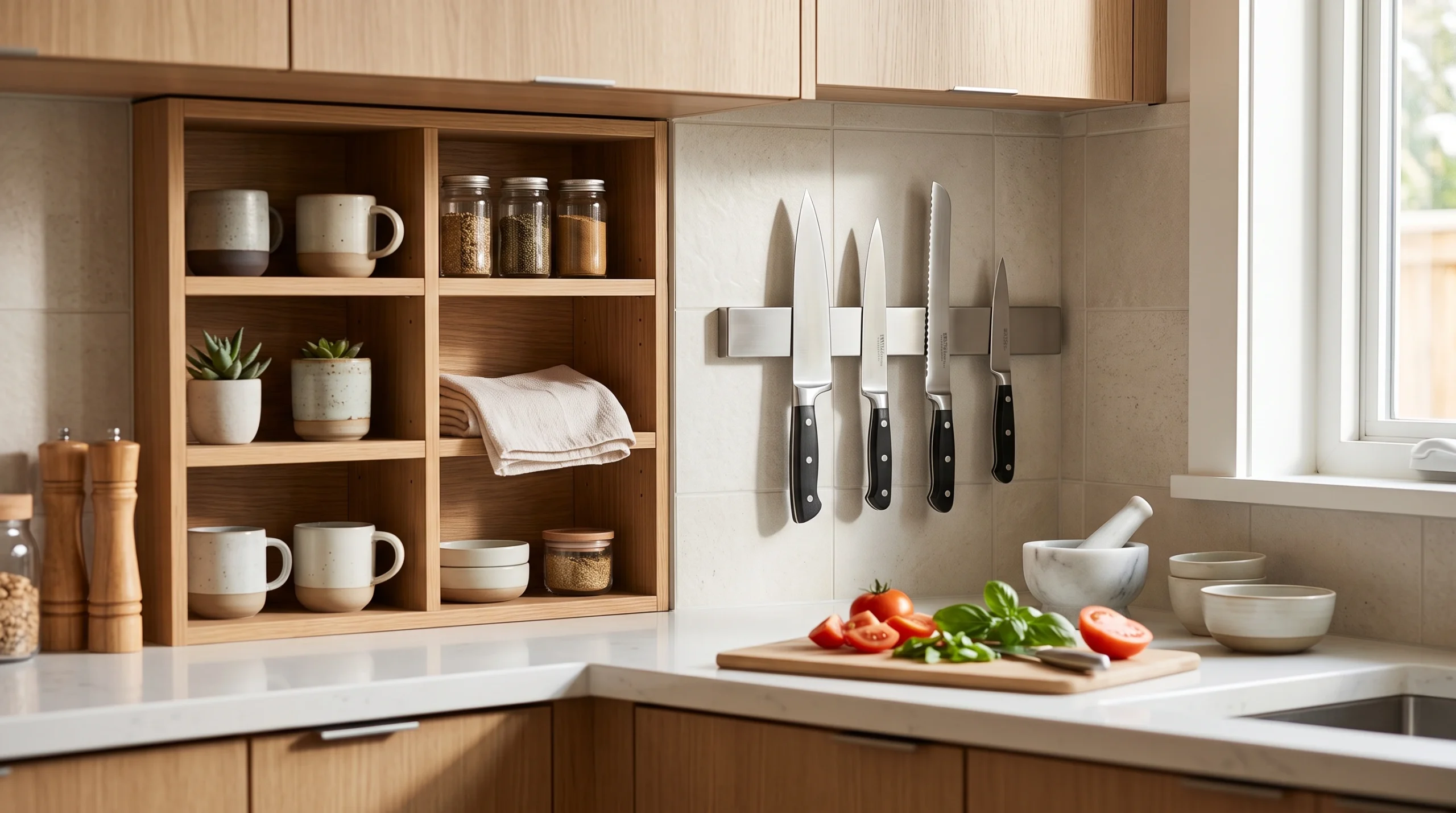
A magnetic knife strip is a thin bar with a magnetic surface that holds knives directly on the wall. Instead of storing knives loose in a drawer, where they can be unsafe to reach for, they stay lined up and visible.
This is a smart option for a kitchen with no cabinets because it frees up an entire drawer, or in some cases, replaces the need for a knife block that takes up counter space. It also keeps blades sharper for longer, since they are not knocking against other utensils in a drawer.
Mount the strip near your main prep area so knives are easy to grab while cooking. For renters, choose a lightweight strip that uses just one or two screws, or a version with strong adhesive backing rated for the weight of your knives.
Keep the strip out of reach of small children if you have any in the home, since this is one storage idea where visibility is convenient for adults but needs a bit of extra thought around safety.
9. Add Hanging Baskets for Fruit, Vegetables, and Odds and Ends
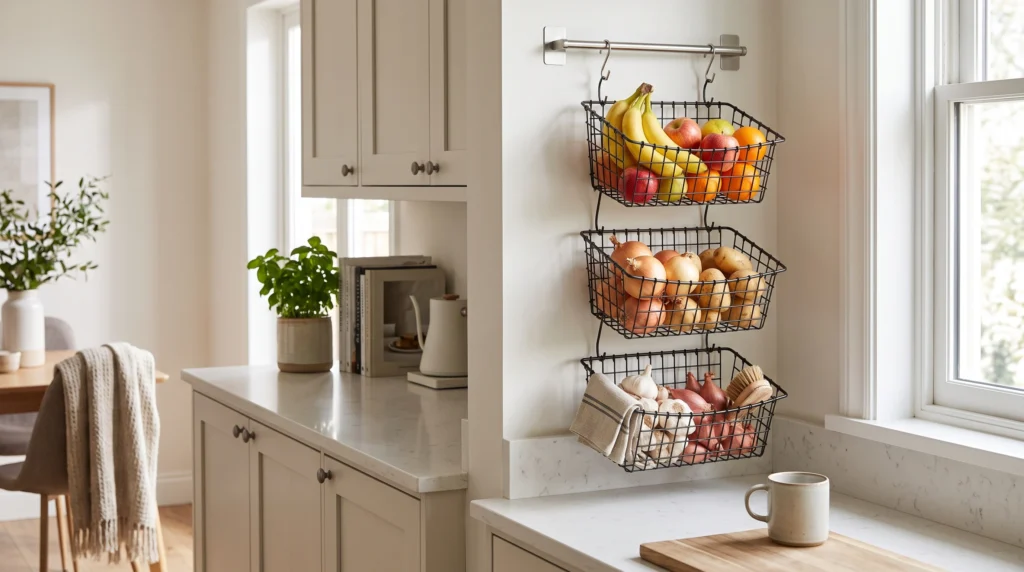
Hanging baskets are wire or fabric baskets that mount to the wall or hang from a rail, and they work well for items that do not need to be sealed or refrigerated, like onions, garlic, potatoes, or fresh fruit.
This idea solves a problem that many small kitchens have, which is counter clutter from produce that needs airflow. Instead of piling fruit and vegetables on the counter, hanging baskets move them off the surface and free up prep space.
Baskets can be hung from a wall rail, a tension rod mounted between two walls, or a small hook system, all of which are removable without damage. This makes it one of the more flexible ideas if you are renting and want to avoid drilling directly into the wall.
Choose baskets with some airflow, like wire or woven styles, rather than solid plastic, since fruits and vegetables need air circulation to last longer.
10. Use a Tension Rod for Cutting Boards and Trays
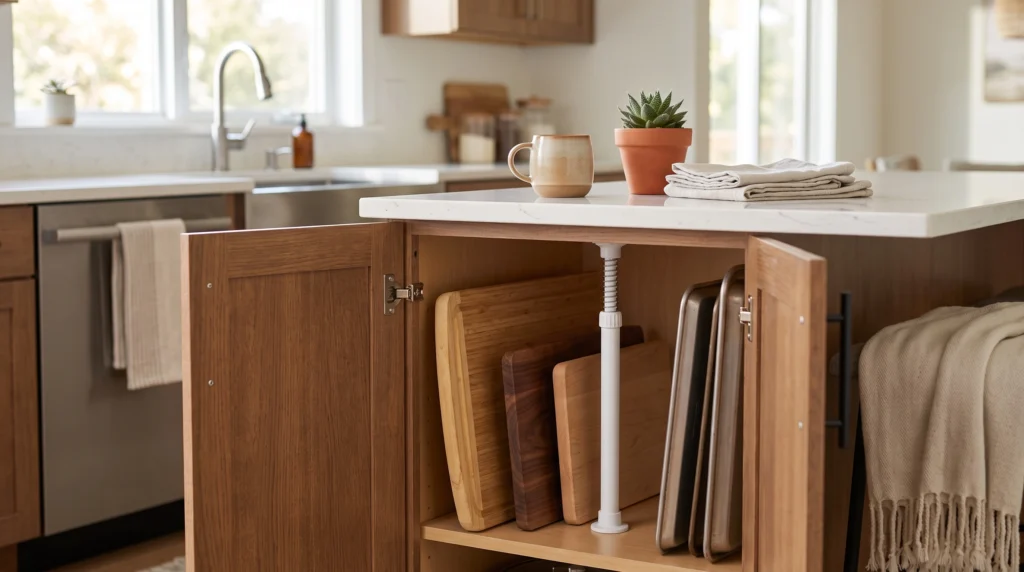
A tension rod is a spring-loaded rod that wedges between two surfaces without any screws or drilling. While most people use them for curtains, they also work well inside a narrow cabinet gap, under the sink, or even mounted vertically between a wall and the side of a fridge.
This idea is especially useful for storing flat items like cutting boards, baking sheets, and trays, which are hard to store neatly because they do not stack well with other kitchen items. A tension rod creates a narrow vertical slot where these items can stand upright instead of lying in a pile.
Because tension rods rely on pressure rather than screws, they are one of the most damage-free storage tools you can use in a rental kitchen. They also cost very little and can be adjusted to fit almost any small gap.
If you have space under the sink, a tension rod placed horizontally can also help separate cleaning sprays from bins or paper products, keeping that awkward space more organized.
Common Mistakes to Avoid
A few small mistakes can make cabinet-free storage feel messier instead of more organized.
Buying Storage Before Measuring Your Space
Always measure the wall, door, or gap you plan to use. A shelf or organizer that is too big for the space will make the kitchen feel more cramped, not less.
Storing Heavy Items on Light-Duty Solutions
Adhesive hooks and light shelving are great for mugs and spice jars, but they are not built for heavy pots or a full stack of plates. Match the weight of the item to the strength of the storage.
Overcrowding Open Shelves
Since everything is visible, packed shelves can make a small kitchen feel more chaotic. Leave a little breathing room between groups of items. This is the same balance we talk about when it comes to making a small bedroom feel bigger — too many objects in one visible spot always shrinks a room, kitchen or not.
Forgetting About Landlord Rules
Always check your lease before drilling, even for small anchors. Many of the ideas above, like tension rods, adhesive strips, and door organizers, are designed specifically to avoid this issue.
How to Choose the Right Storage for Your Kitchen
Not every idea on this list will fit every kitchen. A good way to choose is to think about what you are storing and how often you use it.
For daily items like mugs, spices, and cooking tools, prioritize wall rails, pegboards, and open shelves, since these keep things visible and within reach. For less frequent items like extra dishes or bulk pantry food, stackable bins and a rolling cart work better, since they can be tucked into corners.
If you are unsure where to start, begin with one or two ideas rather than redoing the whole kitchen at once. A single wall rail or one small shelf can make an immediate difference, and you can build from there as you figure out what your kitchen actually needs.
This same approach works well in other small spaces too. If you are also trying to make the most of a tight living room, the layout ideas in small apartment living room layouts follow the same walls-first, floor-space-last thinking.
Frequently Asked Questions
How do I store dishes without cabinets?
Open shelves or floating shelves are the most practical option, since they let you stack plates and bowls in clear view. Pair this with clear containers for anything you are not using daily, like extra serving dishes.
What is the cheapest way to add kitchen storage?
Tension rods, command hooks, and stackable bins tend to be the most affordable options, since they require no tools and can often be reused in your next home. A single wall rail with a few hooks is also a low-cost way to add noticeable storage.
Can I add shelves in a rental kitchen without damaging the wall?
Yes. Look for shelving brackets rated for drywall anchors, which leave small, easily patched holes, or choose heavy-duty adhesive shelving designed for light kitchen items. Always check your lease for any specific rules about wall modifications first.
Where should I put a rolling cart in a small kitchen?
An empty corner or the end of a counter usually works best. Choose a spot that does not block walking paths, since the cart’s main advantage is being movable when you need more open floor space.
How do I organize a kitchen with no pantry?
Over-the-door organizers, stackable bins, and open shelving can act as a substitute pantry. Grouping items by type, like grains, canned goods, and snacks, makes it easier to find what you need without a dedicated pantry room.
Is it worth buying storage furniture for a rental kitchen?
Yes, especially freestanding pieces like rolling carts or small shelving units, since these move with you when you leave. Unlike built-in storage, this is furniture you keep long-term, which makes it a practical investment even in a temporary rental.
Final Thought
A kitchen without cabinets is not a kitchen without options. Once you start using your walls, doors, and vertical space, you often end up with more usable storage than a few small cabinets would have given you anyway.
Start with one change, like a single shelf or a wall rail, and build from there based on what your kitchen actually needs. Small, renter-friendly upgrades like these tend to add up quickly, and most of them can move right along with you to your next place.
