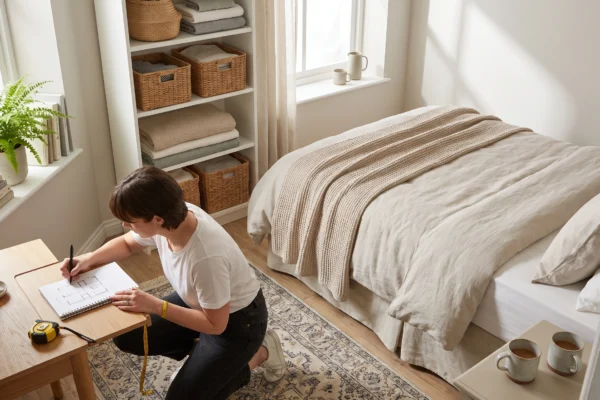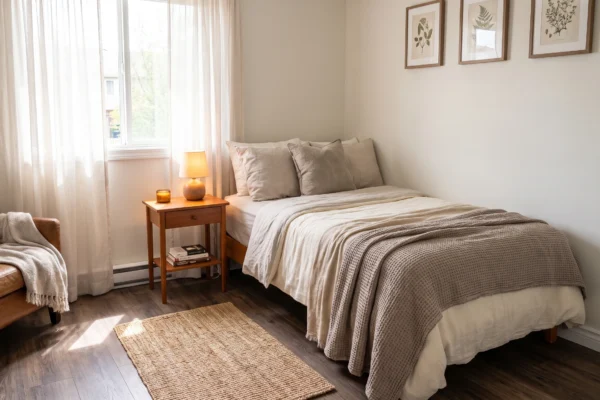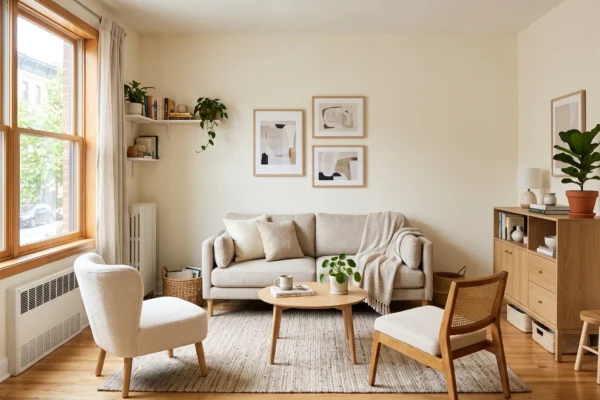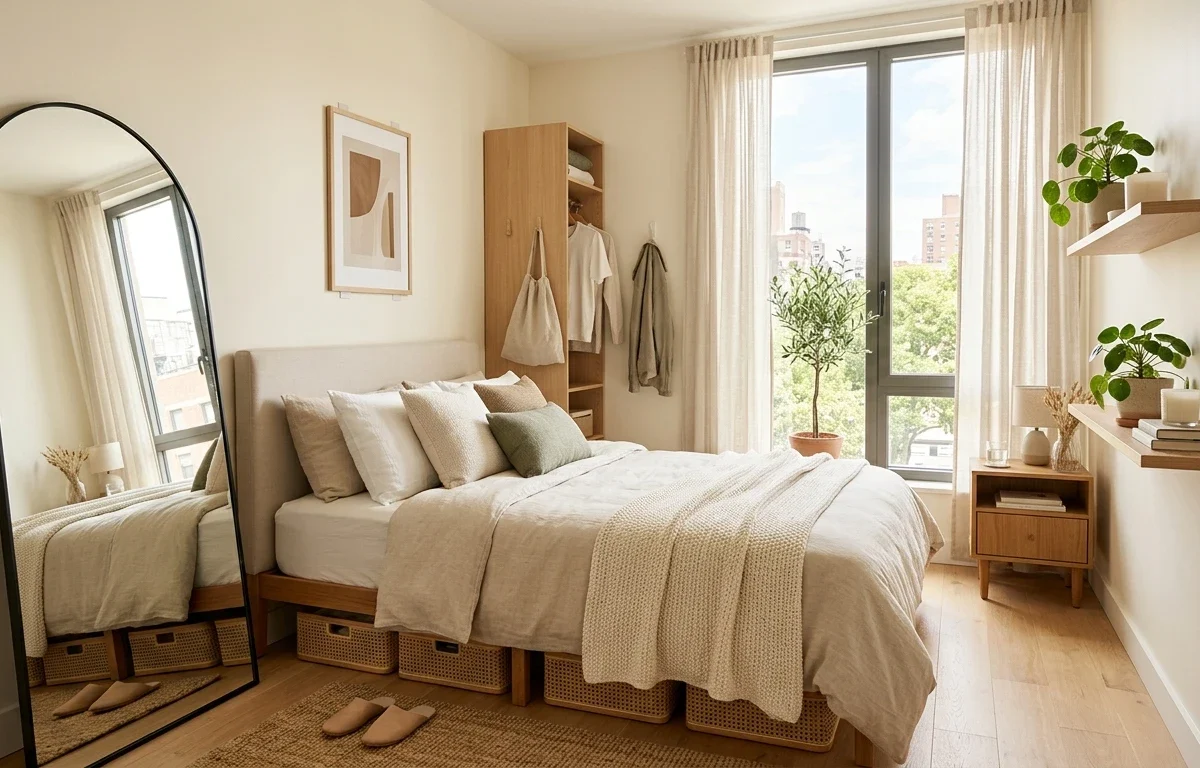
A small bedroom does not have to feel cramped or crowded. The right layout, furniture, colors, lighting, and storage choices can make the room feel more open without changing the walls or doing expensive work.
The biggest difference often comes from simple changes. Moving the bed, reducing visual clutter, using vertical space, or adding a well-placed mirror can change how the whole room feels. You can also choose furniture that serves more than one purpose, which helps free up valuable floor space.
The good news for renters is that most of these ideas are temporary and easy to change when you move. Here are practical ways to make a small bedroom feel bigger while keeping it comfortable and useful.
Start With the Bedroom Layout
Before buying anything or adding new decor, look at how your bedroom is arranged. A poor layout can make even a reasonably sized room feel much smaller.
Start by looking at the main walking path. You should be able to move around the bed without squeezing between furniture.
If possible, keep the center of the room as open as you can. Large furniture placed in the middle of the floor can make the entire bedroom feel blocked.
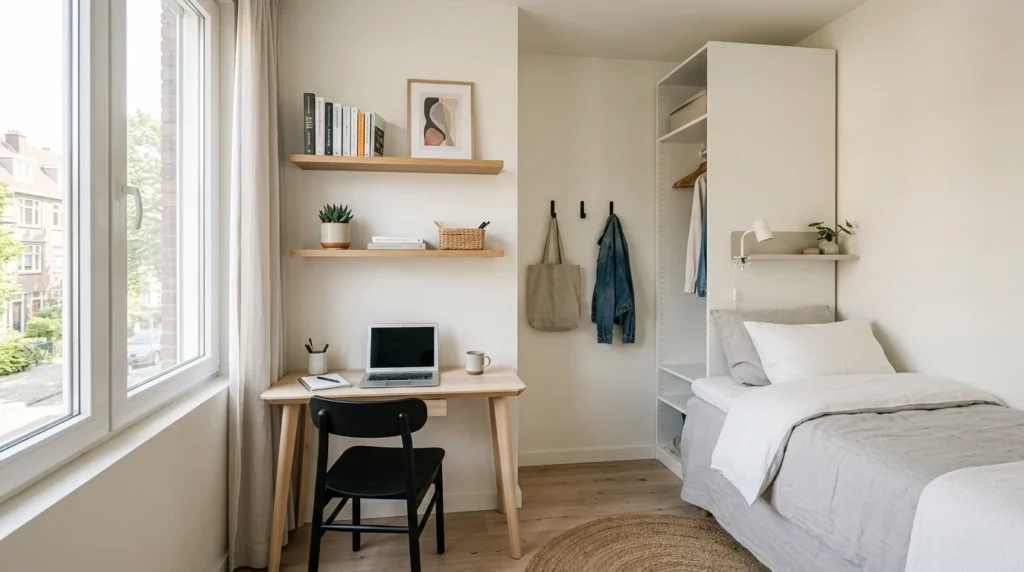
Choose the Right Bed Placement
The bed is usually the largest piece of furniture in a bedroom, so its position has a major effect on the room.
In many small bedrooms, placing the bed with the head against the longest solid wall works well. This can leave more usable space around the rest of the room.
However, do not automatically push the bed into a corner just to create more floor space. If one side becomes difficult to access, the room may feel awkward and less comfortable.
Before settling on a position, try two or three arrangements. Even moving the bed a few inches can improve the walking space.
Keep the Main Walking Area Clear
A clear path makes a bedroom feel more open.
Look at the areas you use most often, such as the route from the door to the bed or from the bed to the closet. Avoid placing baskets, stools, small tables, or other items in these paths.
You do not need an empty bedroom. You simply want the open areas to be intentional.
Choose Furniture That Fits the Room
Furniture size matters more than the number of pieces you own.
A large bed, deep dresser, oversized nightstand, and bulky chair can quickly overwhelm a small bedroom. Even if every item is useful, there may not be enough visual or physical space between them.
Choose furniture with proportions that suit the room.
For example, a slim nightstand can provide enough space for a lamp and phone without taking up the same floor area as a wide bedside table.
Look for Multifunctional Furniture
Furniture that performs two jobs can be especially helpful in a small bedroom.
A storage bench at the end of the bed can provide seating and hidden storage. A small desk can double as a dressing area. A bed with drawers underneath can provide storage without adding another large cabinet.
The goal is not to fill the room with clever furniture. It is to reduce the number of separate items you need.
Give Furniture Some Breathing Room
Try not to push every piece of furniture tightly against another piece.
A little space between the bed, dresser, and other furniture can make the room easier to move through. It also helps each item look more intentional.
When furniture is packed together, the eye sees one large block. Small gaps can create a greater sense of open space.
Use Light Colors to Open Up the Room
Color can change how a bedroom feels without changing its actual size.
Light colors such as soft white, cream, pale beige, light gray, and muted pastels can help create a brighter and more open feeling.
You do not have to make everything white. A room can still have warmth and personality.
Try using one light base color for the walls and larger pieces, then add texture through bedding, curtains, rugs, and smaller decor.
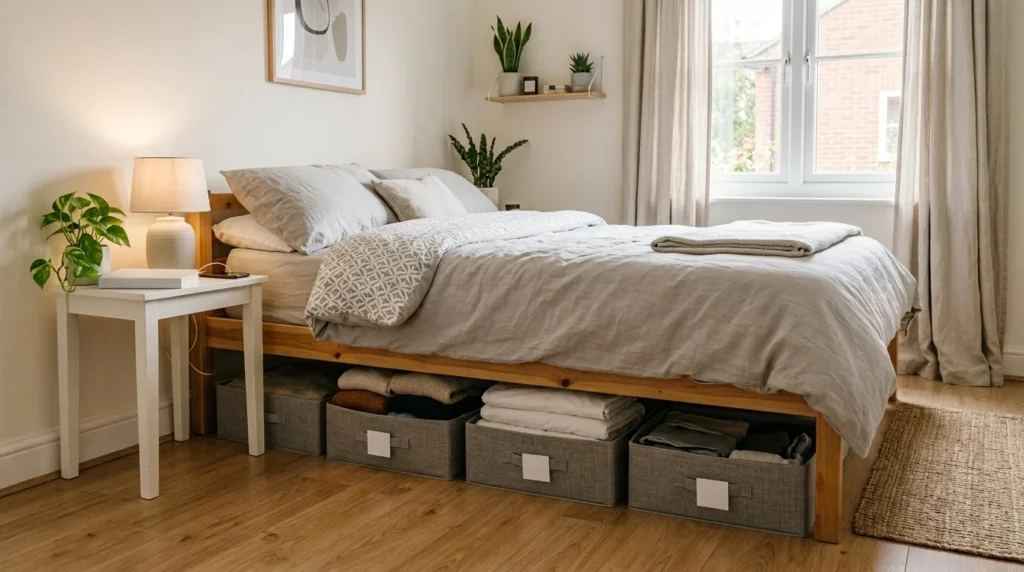
Keep the Color Palette Simple
Too many strong colors can make a small bedroom feel visually busy.
A simple color palette helps create a calmer appearance. You might use warm white, beige, and soft brown, or light gray with muted blue and white.
This does not mean your bedroom needs to look plain. You can add interest through patterns and textures while keeping the main colors connected.
Use Similar Colors for Large Pieces
When the bed, curtains, rug, and larger furniture pieces have similar light or neutral tones, they can blend together more easily.
This reduces visual breaks and can make the room feel less crowded.
For example, a light rug that is close in color to the floor can create a smoother transition instead of making the floor look divided into smaller sections.
Make Better Use of Natural Light
Natural light can make a small bedroom feel brighter and more spacious.
Keep windows as clear as possible. Avoid placing tall furniture directly in front of a window if it blocks a large part of the light.
Choose curtains that allow daylight into the room. If privacy is important, lightweight curtains can let some natural light through while still giving you coverage.
During the day, open the curtains fully rather than leaving them partly closed.
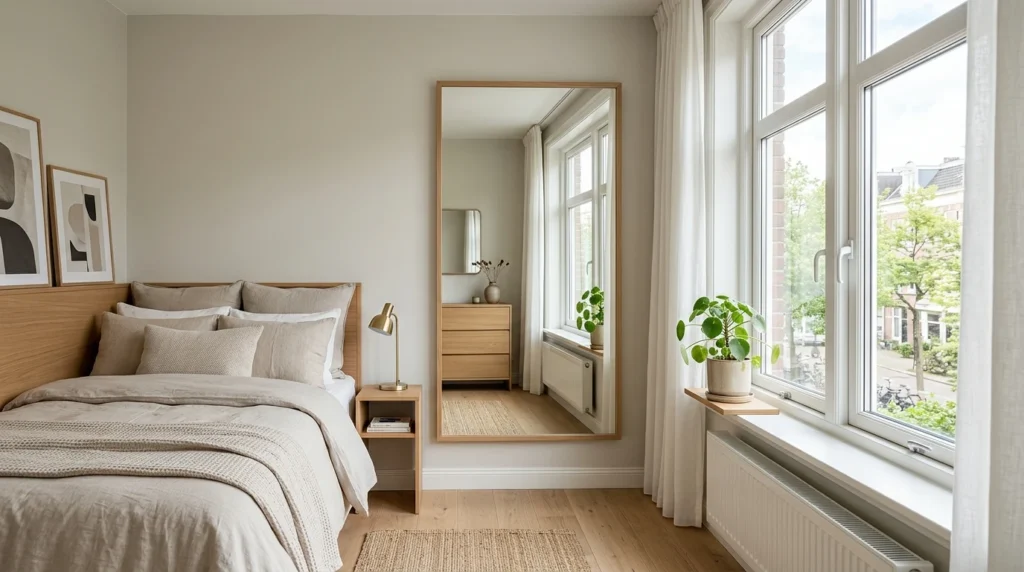
Avoid Blocking the Window
A tall dresser, bookcase, or large plant in front of a window can reduce the amount of light entering the room.
If you need storage near the window, choose a lower piece that does not cover much of the glass.
This is a simple change, but it can make the room feel noticeably brighter.
Add a Mirror in the Right Place
Mirrors are useful in small bedrooms because they reflect light and the surrounding space.
Instead of adding several small mirrors, consider using one larger mirror in a practical location.
A mirror placed where it can reflect a window or another bright part of the room can help spread light around the space.
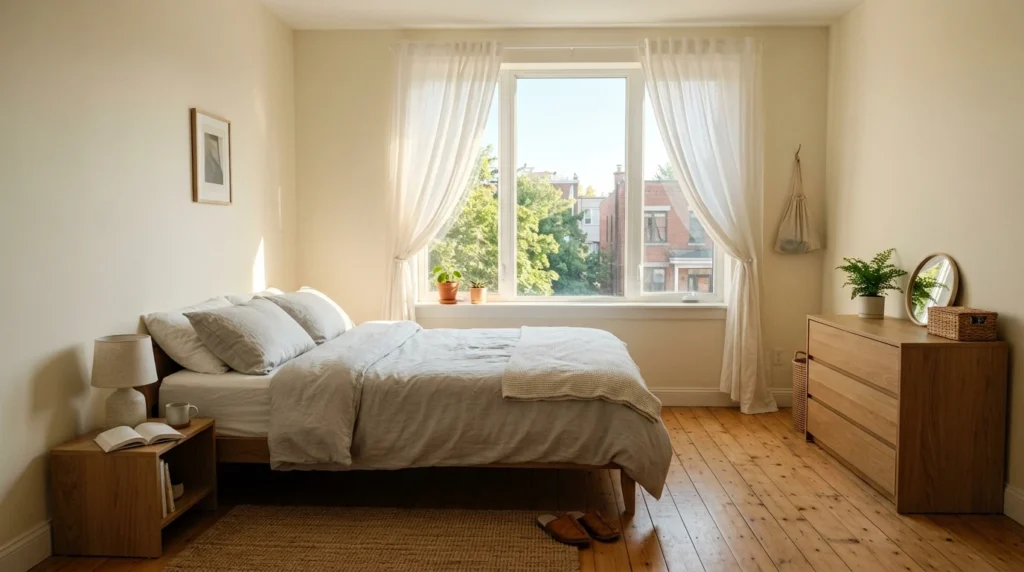
Use a Full-Length Mirror Without Taking Floor Space
If you need a full-length mirror, you do not necessarily need a large floor-standing model.
A wall-mounted mirror can provide the same function while keeping the floor clear. For renters, a suitable removable hanging method may work if the mirror is light enough and the rental rules allow it.
A mirrored wardrobe door can also combine storage and reflection in one area.
Use Vertical Space
When floor space is limited, look upward.
Walls often provide unused storage and decorating space that does not take away from the walking area.
Floating shelves, wall-mounted organizers, hooks, and tall storage can help you use the room’s vertical space more effectively.
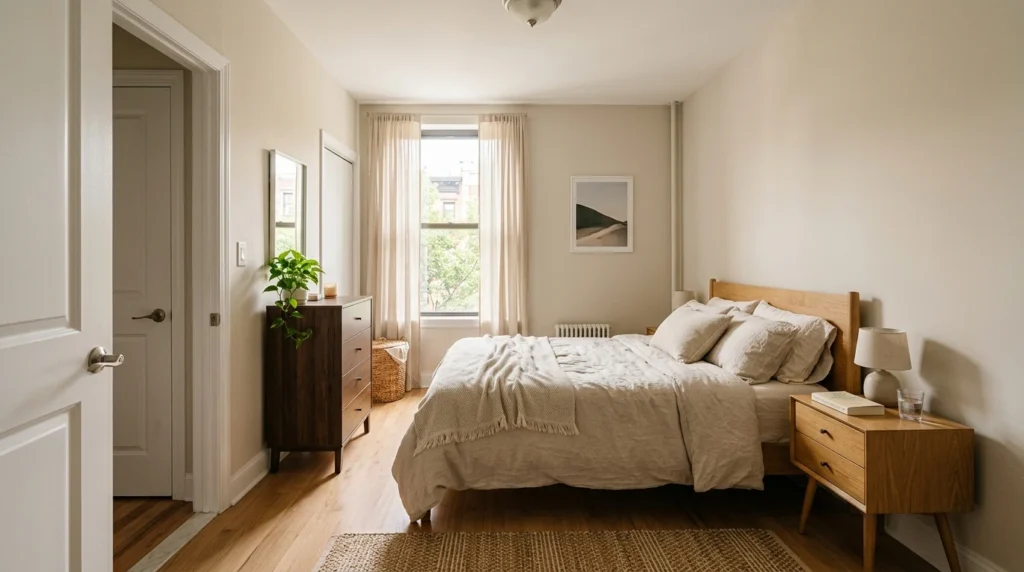
Add Floating Shelves
A narrow floating shelf can hold books, a small plant, framed art, or everyday items without taking up floor space.
Do not cover every wall with shelves. A few carefully placed shelves can be more useful than a large collection of small storage pieces.
For renters, look for removable or low-damage hanging options that match the weight of the items you plan to store.
Think About Ceiling Height
You can also use the height of the room to create a more open visual effect.
Hanging curtains closer to the ceiling and allowing them to fall toward the floor can draw the eye upward. Tall, narrow storage can have a similar effect.
The idea is simple: use vertical lines to make the room feel taller rather than filling the floor with more furniture.
Keep Storage Off the Floor
One of the fastest ways to make a small bedroom feel crowded is to let storage spread across the floor.
Baskets, boxes, laundry piles, shoes, and random items can quickly reduce the sense of open space.
Whenever possible, move storage upward or underneath existing furniture.
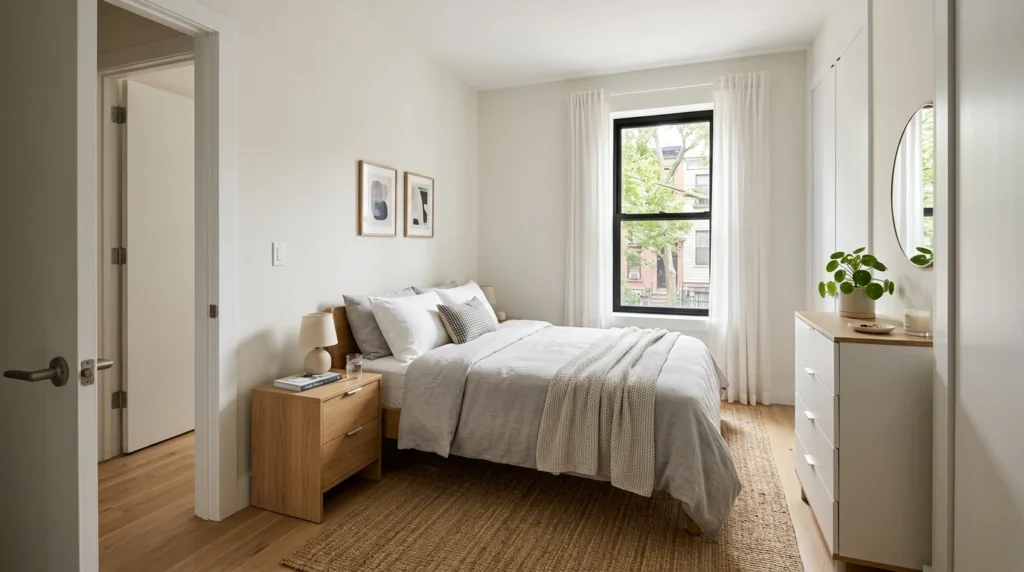
Make Use of Under-Bed Storage
The area under your bed can become valuable storage space.
Use low containers, drawers, or suitable storage bags for items you do not need every day. Seasonal clothing, spare bedding, and other less-used items can often fit there.
Keep the containers organized so the space does not become a hidden pile that is difficult to use later.
Use Wall-Mounted Storage
Wall-mounted storage can free up floor space while keeping everyday items easy to reach.
A small wall organizer can hold accessories, keys, or other items that might otherwise end up on a dresser.
If you rent, choose solutions that can be removed easily and follow your landlord’s rules about mounting items.
Declutter Before Adding More Decor
Sometimes the best way to make a small bedroom feel bigger is to remove things.
Look around the room and ask whether each item needs to stay there. If a chair is always covered with clothes, it may be acting as storage rather than seating.
The same applies to the nightstand. If it is covered with books, chargers, cups, skincare products, and other items, the surface can make the whole bedroom feel messy.
Reduce Visual Clutter
Visual clutter is not only about how much stuff you own. It is also about how many things are visible at the same time.
Keep everyday items in drawers, baskets, or closed storage when possible.
A simple bedroom does not need to be completely minimalist. The goal is to give your eyes a few clear areas to rest.
Choose Bedroom Decor Carefully
Small bedroom decor should add personality without taking over the room.
Instead of placing many small decorative objects around the bedroom, choose a few pieces that have a clear purpose or strong visual value.
One large piece of artwork can sometimes look cleaner than a wall filled with many small frames.
The same idea applies to bedding. A simple pattern with a few coordinated textures can create interest without making the bed look overly busy.
For more ideas, see our guide to small bedroom decor
Avoid Too Many Small Pieces
Small decor can seem harmless because each item takes up very little space.
The problem is that several small items together can create visual clutter.
Try grouping a few meaningful pieces instead of spreading them across every available surface. Leave some areas empty so the room has a sense of balance.
Use Lighting to Create More Depth
Good lighting can change the mood and appearance of a small bedroom.
Do not rely only on one ceiling light. If possible, use a combination of general lighting and smaller lamps.
A bedside lamp can create a softer area of light, while a wall light can provide useful illumination without taking up space on a nightstand.
Choose Wall or Slim Lighting
When bedside surfaces are small, bulky lamps can take up too much room.
A wall-mounted light or slim lamp can leave more space for other essentials.
For renters who cannot install permanent fixtures, plug-in wall lights or other removable options may provide a similar effect without major changes to the room.
Keep the Floor Visually Open
The more floor you can see, the more open the bedroom can appear.
This does not mean you need to remove your rug or furniture. Instead, choose pieces that leave some visible floor around and underneath them.
Furniture with raised legs can sometimes make a room feel lighter because you can see more of the floor beneath it.
A bed with a solid base that reaches all the way to the floor may create a heavier visual effect than a design with visible space underneath.
Use a Rug Without Making the Room Feel Smaller
A rug can make a small bedroom feel warmer and more finished, but its size and placement matter.
A very small rug placed in the center of the room can visually divide the floor into separate sections.
Instead, consider a rug that works with the bed and surrounding furniture as one arrangement. The exact size will depend on the room and bed, but the goal is to create a connected area rather than several disconnected pieces.
Choose a lighter or quiet pattern if the bedroom already has a lot of visual detail.
Make the Bed the Main Focal Point
A small room can feel more organized when there is one clear focal point.
In a bedroom, the bed is usually the natural focal point. Keep the bedding neat and choose colors that work with the rest of the room.
A simple headboard can add structure, but avoid an oversized design that takes up unnecessary visual space.
You can also use bedding to create a calm layered look with a few textures instead of many decorative pillows and accessories.
Try a Simple Bedroom Organization Reset
If your bedroom still feels cramped, give it a quick reset.
Start by removing everything from the floor that does not belong there. Then clear the main surfaces, such as the nightstand and dresser.
Next, look at your storage. Move seasonal or rarely used items into under-bed or higher storage areas.
Finally, check the walking path around the bed. If anything makes movement difficult, consider moving or removing it.
This small reset can make the room feel different without buying anything.
Common Small Bedroom Mistakes to Avoid
Some decorating choices can make a small bedroom feel even smaller.
Choosing Furniture That Is Too Large
A large dresser may offer plenty of storage, but it can take up more visual and physical space than the room can handle.
Measure the available area before bringing in new furniture. Pay attention to depth as well as width.
Filling Every Empty Wall
An empty wall does not always need decoration.
Leaving some wall space open can make the room feel calmer and less crowded. Choose wall decor based on what the room needs rather than trying to fill every blank area.
Using Too Many Dark, Heavy Pieces
Dark colors are not forbidden in small bedrooms, but several large dark pieces can create a heavier look.
If you love dark colors, consider using them as accents while keeping larger surfaces and major furniture pieces lighter.
Keeping Things You Rarely Use
Storage should support your daily life, not hide things you never use.
If a box has been untouched for years and does not serve a clear purpose, it may be taking up valuable space.
Decluttering regularly helps keep your bedroom easier to manage.
A Simple Renter-Friendly Plan
You do not need to change everything at once.
Start with the layout. Move the bed and larger furniture until the walking path feels comfortable.
Then remove unnecessary items from the floor and surfaces. After that, improve the lighting and make better use of vertical or under-bed storage.
Finally, add a mirror, lighter textiles, or a few simple decorative touches if the room still needs more warmth.
This approach keeps the changes affordable and temporary while giving you a noticeable improvement in how the room feels.
Frequently Asked Questions
What is the easiest way to make a small bedroom feel bigger?
Start by clearing the floor and improving the furniture layout. Keep the main walking paths open, reduce visual clutter, and use light colors and natural light to create a more open feeling.
Does a mirror really make a small bedroom look bigger?
A mirror can help create a greater sense of openness because it reflects light and part of the surrounding room. Positioning it where it can reflect a window or bright area can make it especially useful.
What colors make a small bedroom look bigger?
Light and soft colors such as warm white, cream, pale beige, light gray, and muted pastels can help a bedroom feel brighter and more open. You can still add darker colors through small accents.
Where should I put my bed in a small bedroom?
Start by testing the longest practical wall and make sure there is enough room to move around the bed. Avoid blocking doors, windows, closets, or the main walking path.
How can renters add storage without losing floor space?
Use under-bed storage, floating shelves, wall organizers, hooks, and tall narrow furniture where appropriate. For mounted solutions, choose renter-friendly options that match the weight of what you need to store.
Should a small bedroom have a rug?
Yes, if the rug fits the room and furniture arrangement. Avoid a very small rug that visually breaks up the floor. A well-sized rug can make the bed area feel more connected and comfortable.
Make the Room Feel Bigger by Making It Simpler
You do not need to remodel a small bedroom to make it feel more spacious. Start with the things that take up the most room: the bed, large furniture, storage, and clutter.
Create a clear walking path, use vertical and under-bed storage, let in more natural light, and choose furniture that fits the scale of the room. Then add simple decor that supports the space instead of filling it.
For renters, these small changes can make a big difference because they are easy to adjust, remove, or take with you when you move.