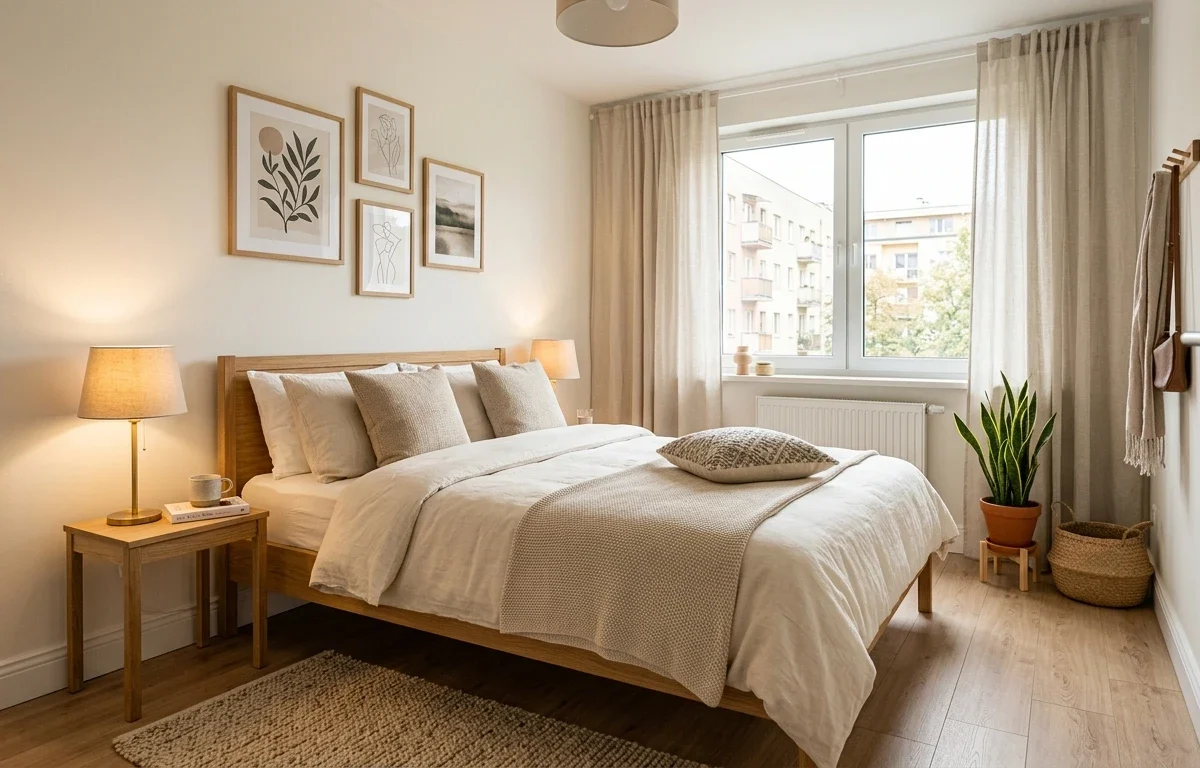
A small bedroom does not need a lot of furniture or decor to feel complete. In fact, adding too many pieces can make the room feel crowded before you have even finished decorating it. The better approach is to choose a few elements that work together, keep the floor open, and give each part of the room a clear purpose.
The best small bedroom decor ideas are often simple: a well-sized bed, useful bedside storage, soft lighting, a mirror, a few pieces of wall decor, and bedding that brings the colors together. Small changes can also make a rental bedroom feel more personal without putting your deposit at risk.
This guide covers practical ways to make a small bedroom feel finished, comfortable, and balanced while keeping the space easy to live in.
Start With the Bed
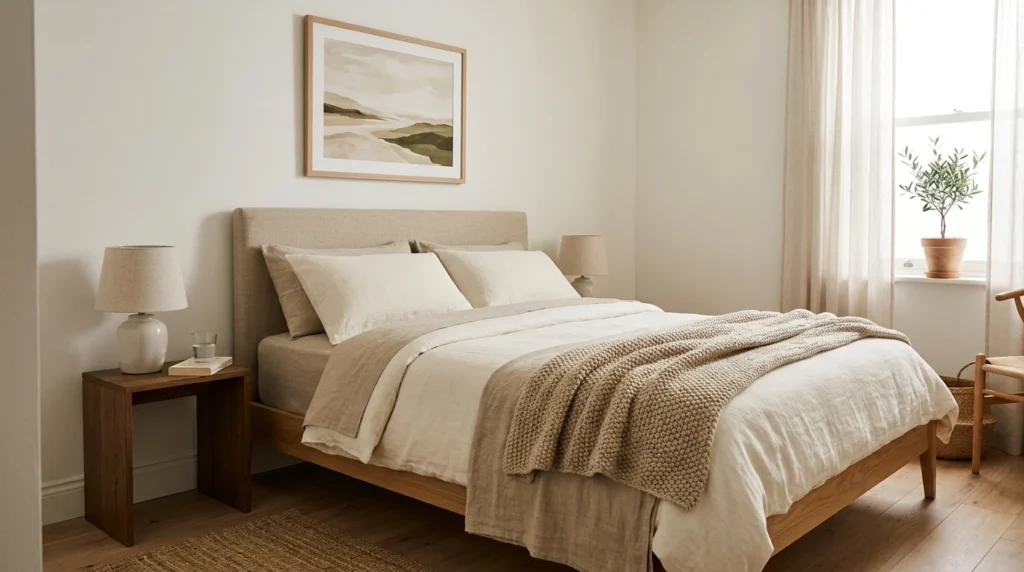
The bed is usually the largest item in a bedroom, so it naturally becomes the main visual focus. In a small room, getting the bed right can make the rest of the decorating much easier.
Choose a bed frame that fits the room without taking up more floor space than necessary. A simple frame with slim legs can help keep the area underneath and around the bed visually open.
If the room already feels tight, avoid a very bulky frame with wide sides or heavy decorative details. A simple wood or upholstered frame can give the room enough character without adding visual weight.
Give the Bed a Clear Focal Point
A small bedroom still benefits from having one main focal point. The wall behind the bed is usually the easiest place to create one.
A headboard can define the sleeping area and make the room feel more finished. If you do not want to buy a new headboard, you can create a similar effect with framed artwork, a woven wall hanging, or removable wallpaper behind the bed.
For renters, keep permanent changes out of the plan. Removable wallpaper or lightweight wall decor can create a clear backdrop without requiring a major change to the room.
Keep Bedding Simple but Layered
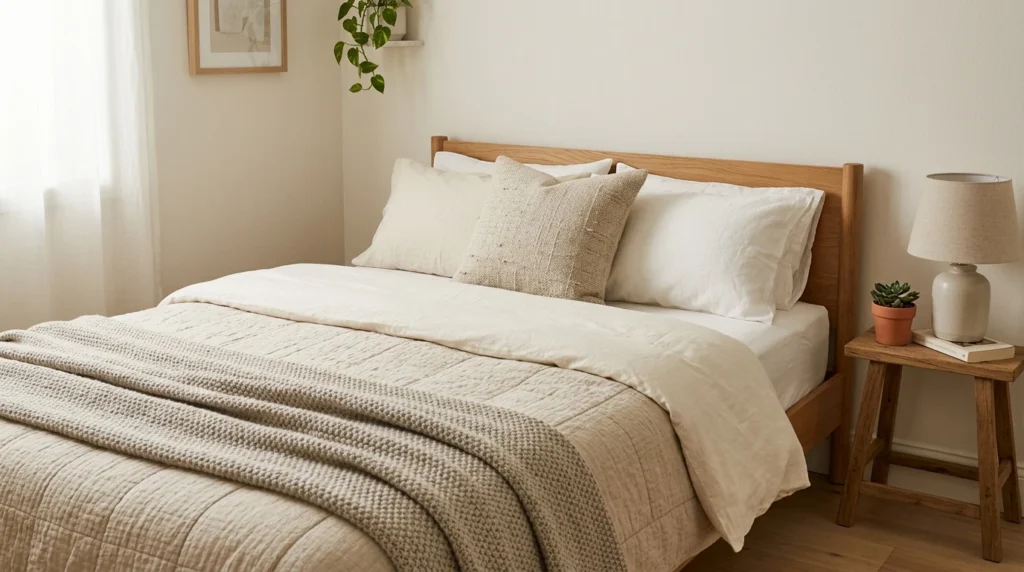
Bedding takes up a large visual area, so it has a big effect on how the room feels.
A simple combination of a duvet or comforter, two sleeping pillows, and one or two decorative cushions is often enough. You do not need a large pile of pillows to make the bed look finished.
Use a small mix of textures rather than many different colors. For example, cotton bedding with a soft throw and a textured cushion can add interest while keeping the overall look calm.
Soft neutrals, warm whites, muted greens, and earthy tones work especially well in small bedrooms. They can create a relaxed look without making the room feel visually busy.
Use One Main Color and Two Supporting Tones
A simple color palette is easier to manage in a small space.
Choose one main color for the largest elements, such as bedding or curtains. Then add one or two supporting colors through cushions, artwork, a rug, or small decor pieces.
For example, warm white bedding can be paired with light oak furniture and muted green accents. The colors do not need to match exactly. They simply need to feel like they belong together.
Choose a Nightstand That Fits the Room
A nightstand does not have to be large to be useful.
If you have enough space beside the bed, a narrow bedside table can hold a lamp, phone, book, and a few everyday items. If the room is extremely tight, consider a small floating shelf instead.
The goal is to give the bedside area a clear purpose without blocking the walking path.
Try a Floating Shelf
A floating shelf can provide the function of a nightstand while keeping the floor open. This can be especially useful beside a bed where there is not enough room for a full table.
Renters should check their lease before making holes in the wall. If drilling is not allowed, look for a suitable removable mounting solution that can safely support the shelf and anything placed on it.
Do not overload a small shelf. Keeping only the items you use regularly will make the whole area feel cleaner.
Use Lighting to Make the Room Feel Complete
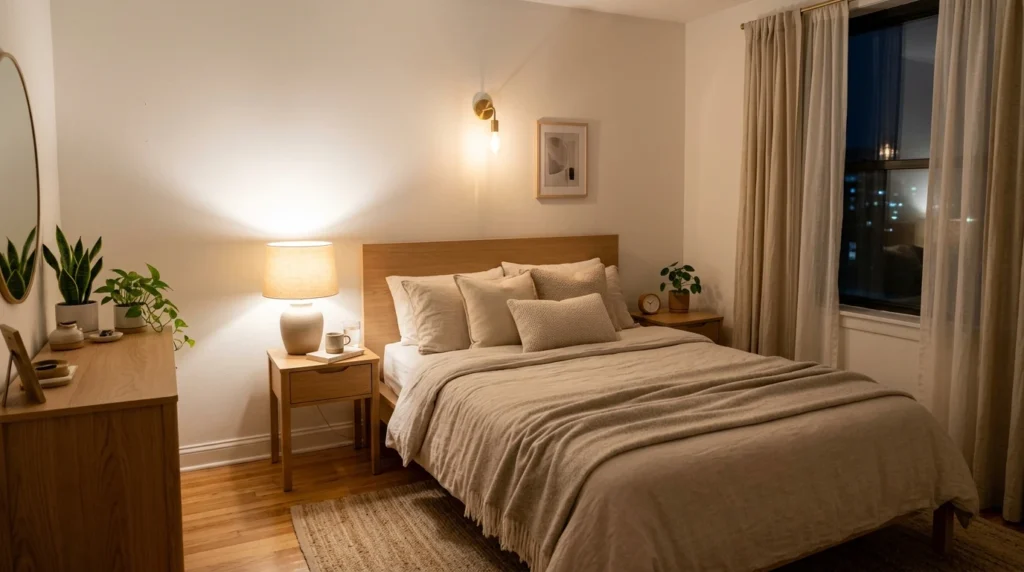
Lighting can change the mood of a bedroom more than another decorative object can.
A single overhead light often makes a bedroom feel flat. Instead, try to create layers with the available natural light, a bedside lamp, and another small light source if the room allows it.
A warm bedside lamp can make the area around the bed feel more comfortable in the evening. If you do not have room for a table lamp, wall lighting can be a useful alternative.
Use Wall Lighting When Floor Space Is Limited
Wall-mounted lights can free up valuable space on a nightstand. They also help create a more finished look around the bed.
For renters who cannot install permanent fixtures, plug-in wall lights can provide a similar effect without changing the electrical system.
Keep cables neat and secure them in a way that does not damage the wall. A messy cable can quickly take away from an otherwise tidy bedroom.
Make Use of Vertical Space
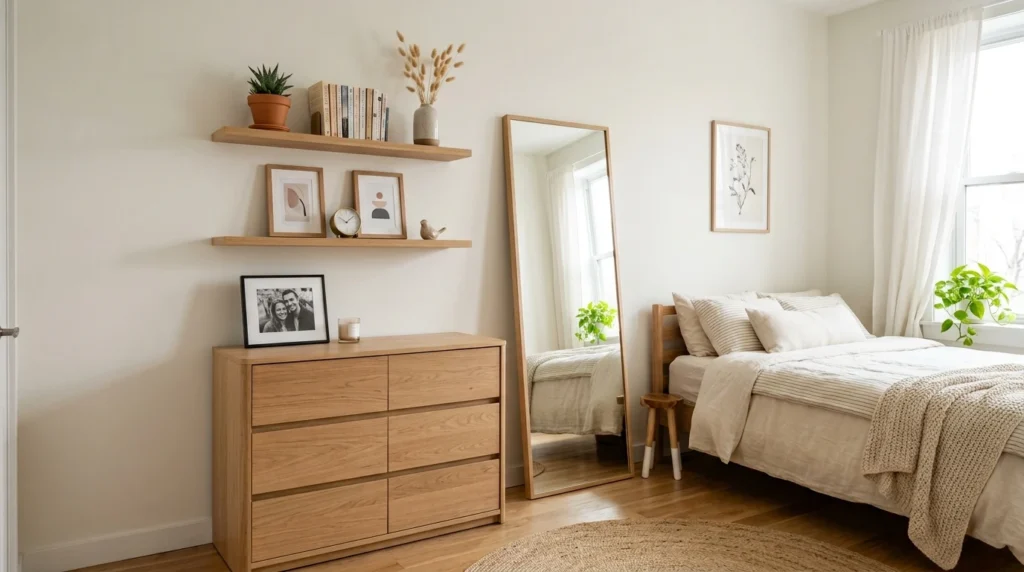
When floor space is limited, look up.
The walls can provide storage and decoration without taking away from the walking area. Floating shelves, tall mirrors, framed artwork, and wall-mounted decor can all make use of vertical space.
A few carefully placed pieces usually work better than covering every wall.
Hang Artwork Above the Bed
The wall above the bed is an easy place to add personality.
One large framed print can create a stronger focal point than several tiny pieces. You can also use two or three smaller frames arranged with enough space between them to look intentional.
For a rental, use appropriate removable hooks or hanging solutions based on the weight of the artwork and the condition of the wall.
Do not hang frames so low that they feel as if they are sitting on the pillows. Leave enough breathing room between the bed and the artwork.
Add a Mirror in the Right Place
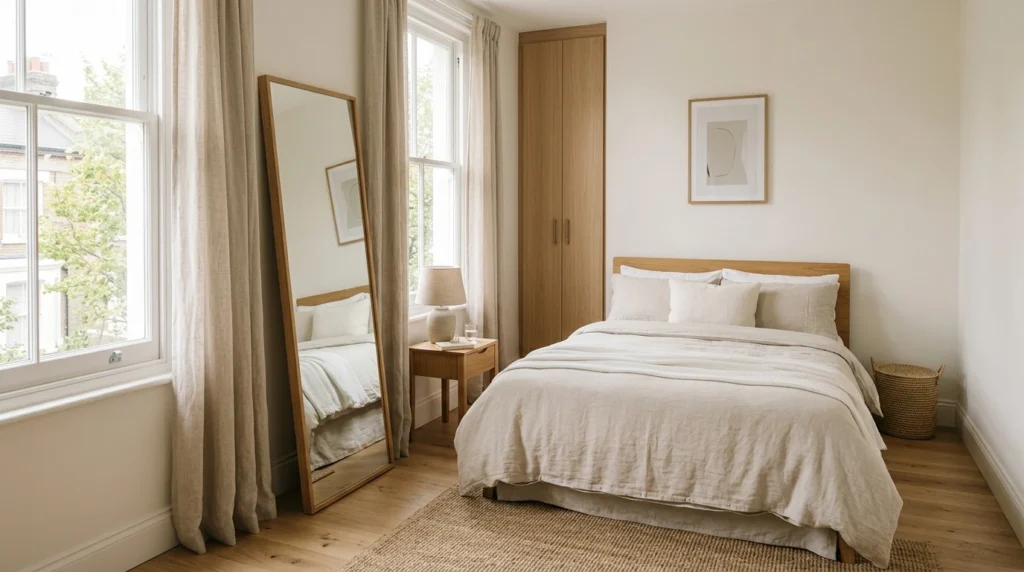
A mirror is useful in a bedroom, but placement matters.
A larger mirror can reflect light and give the room a more open visual feel. A full-length mirror placed near a wardrobe or behind a door can also provide a useful dressing area without taking up much floor space.
If you have a window with good natural light, placing a mirror where it can catch some of that light can make the room feel brighter.
You do not need several mirrors. One well-placed mirror is usually enough.
Choose a Mirror With a Simple Frame
The frame can become part of the room’s decor.
Natural wood works well with warm and earthy colors, while a simple matte frame can suit a more modern bedroom. Pick a finish that connects with another element in the room instead of introducing a completely different style.
If leaning a full-length mirror is practical and safe in your space, it can also avoid the need to mount it to the wall.
Add a Small Rug Without Losing Floor Space
A rug can make a bedroom feel warmer and more finished, but a rug that is too large can make a small room feel crowded.
The best size depends on the bed and layout. The important thing is to avoid creating awkward edges that interfere with doors, drawers, or clear walking paths.
If a full-size area rug does not work, a smaller rug beside the bed can still add softness and texture.
Natural-looking materials and simple patterns are often easier to blend into a small bedroom than very busy designs.
Keep Curtains Light and Simple
Window treatments can have a surprisingly strong effect on a small bedroom.
Heavy or very dark curtains can add visual weight. If the room gets good natural light, lighter curtains can help keep the space feeling open during the day.
You can still use curtains for privacy. Choose a simple fabric that works with your bedding and wall colors rather than treating the window as a completely separate part of the room.
For renters, tension rods can sometimes be useful where suitable, as they avoid drilling into the wall. Always make sure the setup is secure and appropriate for the window.
Give the Dresser and Wardrobe a Clear Role
Storage furniture should do more than hold clothes. It should also fit comfortably into the room.
A dresser that is too deep can make a narrow bedroom feel even narrower. Before adding one, measure the available space and make sure drawers can open without blocking the bed or doorway.
If you already have a wardrobe, use its storage capacity before adding another large piece of furniture.
Keep the Top of the Dresser Edited
A dresser top can quickly become a dumping area for small items.
Instead of filling it with decor, choose a few useful pieces. A small mirror, lamp, framed photograph, or simple decorative object may be enough.
Leave some empty space. That empty area is part of the design and helps the room feel less cluttered.
Create a Built-In Look With Placement
You do not need actual built-in furniture to make a bedroom look organized.
Try grouping furniture so it feels intentional. For example, place a dresser near the wardrobe and use similar finishes or colors to make the pieces feel connected.
A tall narrow bookcase can also provide vertical storage without taking up the same floor area as a wide cabinet.
The key is consistency. Furniture does not have to be from the same collection, but similar tones and proportions can make different pieces work together.
Use Small Decor in Groups
Small decorative objects look better when they have a clear relationship.
Instead of placing one item on every available surface, create small groups. A lamp, framed photograph, and small object can work together on a dresser or shelf.
Try varying height and shape. For example, a short object beside a taller frame creates more interest than several objects of exactly the same height.
The room should still have open areas. A finished bedroom is not the same as a fully decorated bedroom.
Add Texture Instead of More Color
If your bedroom already has a simple color palette, texture can add interest without making the space feel busy.
Think about linen bedding, cotton throws, woven baskets, natural wood, soft curtains, and a textured rug.
These materials can create small differences that make the room feel comfortable without adding many new colors.
This is particularly useful if you prefer neutral bedrooms but do not want the space to feel plain.
Use a Bench Only If You Have Room
A bench at the end of the bed can look nice, but it is not essential.
In a small bedroom, a bench can make the room harder to walk through. If it leaves only a narrow path between the bed and another piece of furniture, skip it.
If you have enough clearance, a slim bench can provide a place to sit or temporarily place a blanket.
The same rule applies to accent chairs. A chair is useful only when the room can comfortably accommodate it.
Create a Small Reading Corner
If your bedroom has an unused corner, you may be able to turn it into a simple reading area.
A compact chair, small side table, and warm lamp can create a useful corner without requiring much furniture.
But do not force a reading corner into a room that does not have the space. In a small bedroom, clear floor space is often more valuable than another decorating feature.
Make the Walls Feel Personal
A bedroom should feel like your space, not a showroom.
Photographs, simple artwork, travel memories, or a woven wall hanging can add personality without taking up floor space.
Choose pieces that share at least one color or visual quality with the rest of the room. This creates a more cohesive look.
Try a Small Gallery Wall
A gallery wall can work in a small bedroom when it is kept controlled.
You might use three or four related frames rather than covering an entire wall. Keep the spacing fairly consistent so the arrangement looks planned.
If making holes is not an option, lightweight frames can be paired with suitable removable hanging methods.
Consider a Removable Accent Wall
If the walls feel plain, a removable accent wall can create a stronger focal point.
The wall behind the bed is usually the most natural choice. A soft pattern, muted color, or subtle texture can add character without requiring changes throughout the room.
Before using peel-and-stick wallpaper, check the product instructions and consider the condition of the rental wall. Removal should be approached carefully because some wall finishes may react differently.
If wallpaper feels like too much, removable decals or a large piece of wall art can create a similar focal point with less coverage.
Keep the Floor Path Clear
One of the easiest ways to make a small bedroom feel better is to protect the open floor area.
Make sure you can walk comfortably from the doorway to the bed and around other important furniture. Avoid placing baskets, stools, plants, or decorative objects where they create obstacles.
This also makes the room easier to clean.
A bedroom can contain plenty of decor and still feel spacious if the main pathways remain clear.
Think About Furniture Scale
Large furniture can overwhelm a small bedroom even when there are only a few pieces.
Look at the proportions of the room before choosing furniture. A narrow dresser may work better than a wide one, and a simple bed frame may feel better than a heavy upholstered design.
This does not mean every piece needs to be tiny. Instead, choose furniture that leaves enough room around it.
A small room needs breathing space.
Hide Everyday Clutter
Decorating becomes much easier when everyday items have a home.
Use the space under the bed when appropriate, drawer organizers for small items, and baskets for things that need to stay accessible.
If you have open shelving, avoid filling every shelf. Closed storage can be especially useful for items that would otherwise create visual clutter.
The goal is not to hide everything. It is to keep the items you see every day intentional.
Use Symmetry When the Layout Allows It
Symmetry can make a small bedroom feel calm and organized.
If the bed is centered on a wall, matching or similar bedside tables and lamps can create a balanced arrangement.
However, you do not need matching furniture to create balance. A small shelf on one side and a narrow table on the other can work if their visual weight feels similar.
Do not sacrifice useful space just to make both sides identical.
Make Natural Light Part of the Decor
Natural light is one of the best features a small bedroom can have.
Keep the area around the window reasonably clear so daylight can enter the room. Light curtains can soften the window while still allowing the room to feel bright.
A mirror can also help reflect some of the available light into the space.
During the day, avoid placing tall furniture directly in front of the main source of natural light unless the layout leaves no better option.
Try These Small Bedroom Color Combinations
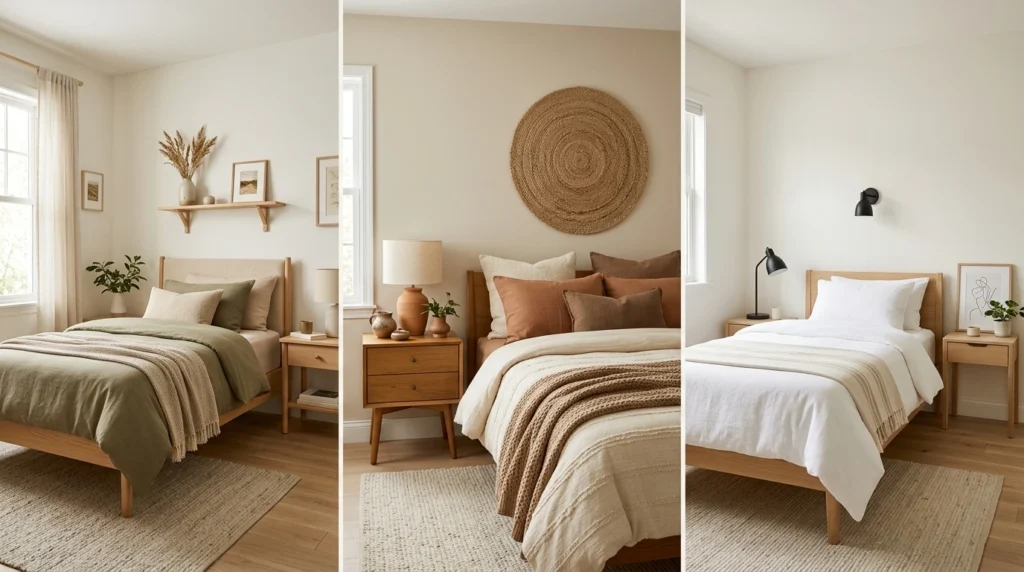
You do not need a complicated color scheme. A few calm combinations can help guide your choices.
Warm White + Natural Wood + Muted Green
This combination feels soft and natural. Use warm white for bedding or walls, natural wood for furniture, and muted green in small accents.
Soft Beige + Cream + Earthy Brown
This palette creates a warm bedroom without relying on strong colors. Add texture through bedding, curtains, and woven accessories.
Light Gray + White + Soft Blue
This combination can give the room a clean and relaxed feel. Keep the blue limited to smaller elements so it does not dominate the room.
Warm White + Light Oak + Black Accents
A mostly light palette can be given more definition with small matte black details, such as a lamp frame, picture frame, or curtain rod.
Common Small Bedroom Decorating Mistakes
Even good decor ideas can make a small room feel worse when they are used in the wrong way.
Buying Furniture Before Measuring
Always measure the available space first. Remember to account for doors, drawers, wardrobe openings, and walking paths.
Using Too Many Small Decorations
A collection of tiny objects can create more visual clutter than one larger, well-placed piece.
Blocking the Natural Light
Tall furniture or heavy window treatments can make an already small room feel darker.
Ignoring the Walking Path
A beautiful bedroom is difficult to enjoy if you have to squeeze between the bed and furniture every day.
Using Too Many Colors
A small room can handle color, but too many unrelated shades can make the space feel disconnected.
Decorating Every Surface
Empty space helps the room breathe. You do not need something on every shelf, wall, or tabletop.
A Simple Way to Finish a Small Bedroom
If the room currently feels unfinished, do not try to change everything at once.
Start with the bed. Choose bedding that gives you a clear color direction and make the wall behind it feel intentional.
Next, fix the lighting. Add a bedside lamp or another suitable light source if the room feels flat in the evening.
Then look at the walls. Add one mirror or a small collection of artwork rather than filling every empty area.
Finally, remove anything that blocks the floor or does not have a useful purpose.
This process is often more effective than buying more decor.
How to Make a Rental Bedroom Feel Finished Without Permanent Changes
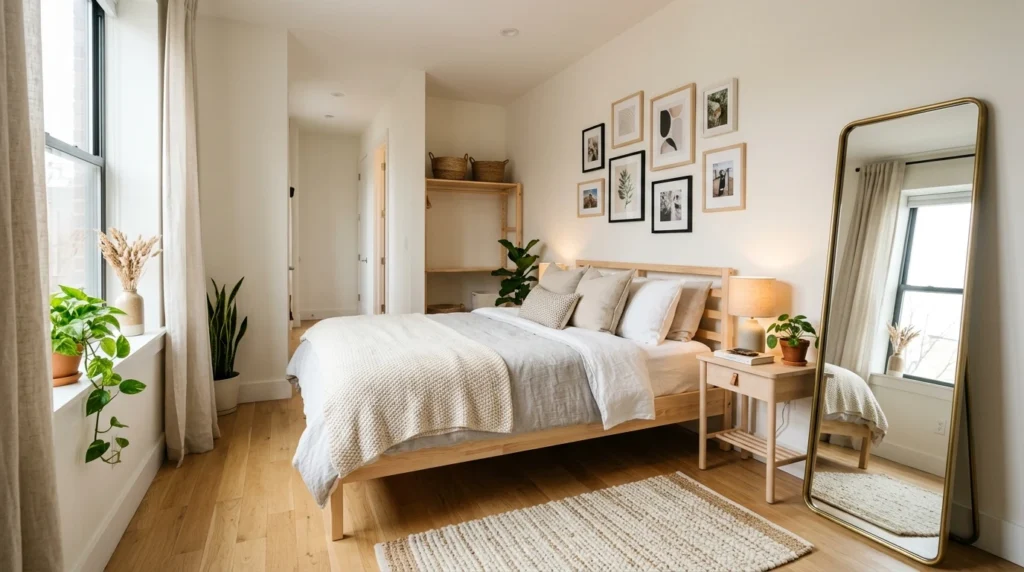
Renters have plenty of options, even when painting or drilling is not allowed.
Use removable hooks for suitable lightweight artwork, tension solutions where appropriate, temporary wall coverings, movable furniture, and decor that can travel with you to your next home.
Focus on changes that are easy to reverse.
A new bedding set, rug, lamp, mirror, curtains, artwork, or small piece of storage furniture can change the feel of a bedroom without altering the structure of the property.
Before making any wall change, check your lease and use products according to their instructions.
The same renter-friendly approach can also help when decorating other rooms. For more ideas, see our guide to renter-friendly living room ideas
The Best Small Bedroom Decor Is Intentional
A small bedroom does not need more stuff. It needs better choices.
Start with the largest visual elements, especially the bed, bedding, and main furniture. Then add lighting, wall decor, texture, and a few personal pieces.
Keep the floor paths open and avoid filling every surface. When each item has a purpose or contributes to the overall look, the room can feel complete without feeling crowded.
For renters, the best part is that many of these changes can be temporary. You can create a bedroom that feels personal and comfortable while still keeping your walls, floors, and lease requirements in mind.
Frequently Asked Questions
How can I decorate a very small bedroom without making it feel crowded?
Start with the bed and essential storage. Keep furniture close to the right scale, use vertical wall space, and leave clear walking paths. A simple color palette and limited decor can also reduce visual clutter.
What colors make a small bedroom feel bigger?
Soft whites, warm neutrals, light earthy shades, and muted colors can help maintain a light and calm look. You can still use darker colors as small accents without making them the main color of the room.
What should I put on the wall above a bed?
A large piece of artwork, a small gallery arrangement, a woven wall hanging, or a renter-friendly accent treatment can work well. Choose something that fits the width of the bed and does not make the wall feel overcrowded.
How can renters decorate bedroom walls without damaging them?
Use suitable removable hooks or hanging systems for lightweight items, and consider removable wall decor where appropriate. Always check the product instructions and your lease before making changes.
Is a rug a good idea for a small bedroom?
Yes, if the rug fits the layout. A small rug beside the bed can add warmth without using much floor space. If you have enough clearance, a larger rug can help visually connect the bed and surrounding furniture.
How do I make a small bedroom look more finished?
Give the room a clear focal point, use a simple color palette, add layered lighting, keep storage organized, and choose a few pieces of personal decor. Most importantly, leave enough open space for the room to function comfortably.