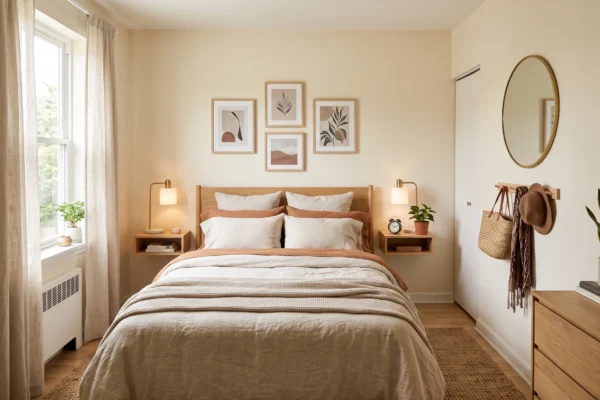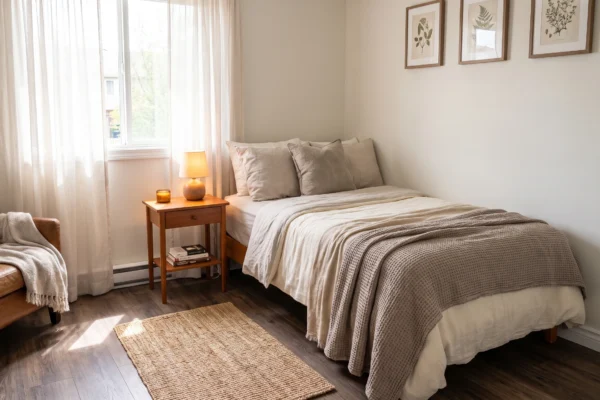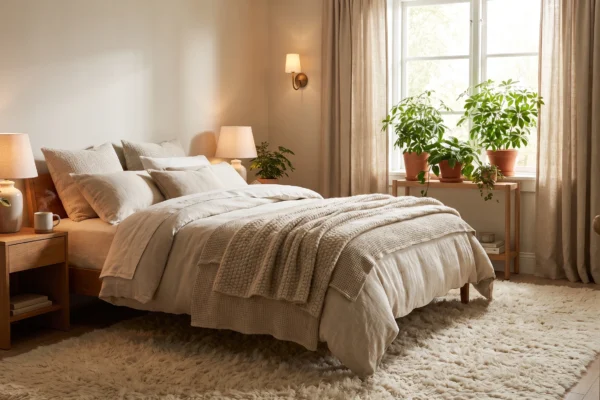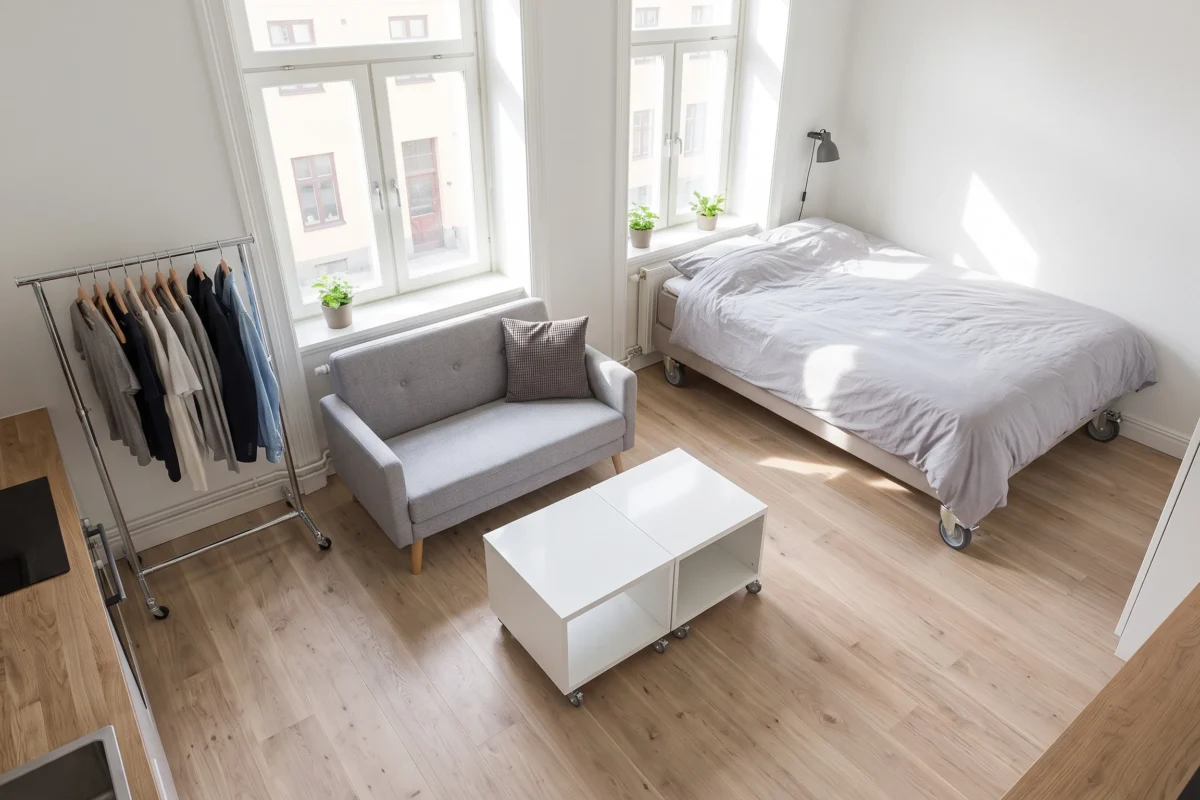
Living in a studio apartment means your bedroom, living room, and sometimes even your dining area share the same space. The challenge is making the sleeping area feel comfortable without making the whole apartment feel crowded.
The right studio bedroom layout can make a big difference. You do not always need more furniture or a larger apartment. Often, it comes down to where you place the bed, how you create zones, and how well you use the walls and space underneath furniture.
These studio bedroom layouts focus on practical ways to create a comfortable sleeping area while keeping the rest of your apartment open and easy to use. You will find ideas for room dividers, storage beds, curtains, small nightstands, furniture placement, and renter-friendly ways to create separation without permanent changes.
1. Place the Bed in the Far Corner
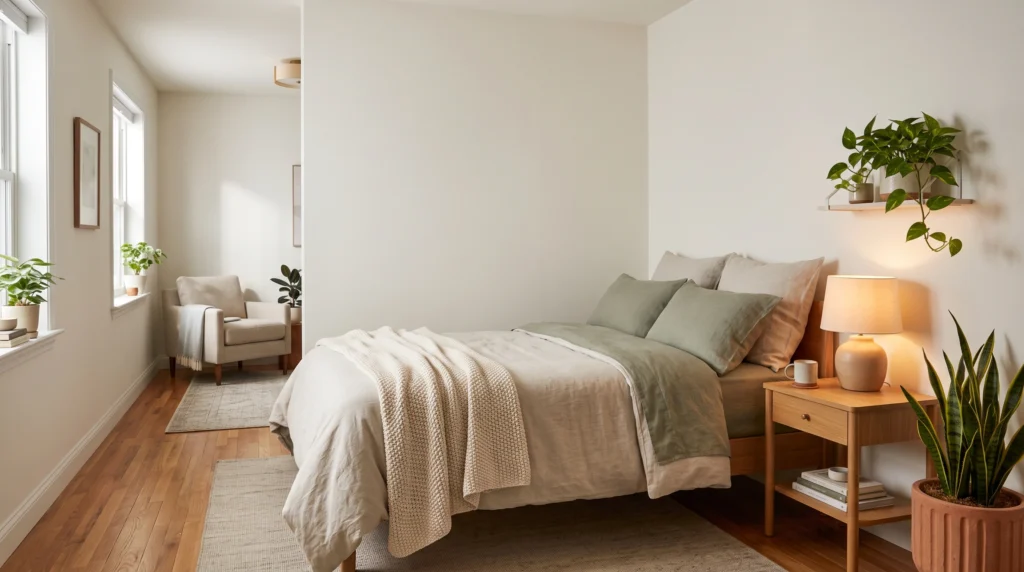
One of the simplest studio bedroom layouts is to place the bed in the farthest corner of the apartment.
This creates a natural bedroom zone without adding a physical divider. Keeping the bed away from the main entrance and living area also makes the sleeping space feel more private.
Try placing the head of the bed against a solid wall rather than directly in front of a window. Keep enough space around the bed for comfortable movement and avoid blocking the main walking path.
If the bedroom area feels plain, use bedding, a small rug, and a bedside lamp to visually separate it from the rest of the studio.
For more inspiration, see these renter-friendly bedroom ideas.
2. Use a Curtain as a Soft Room Divider
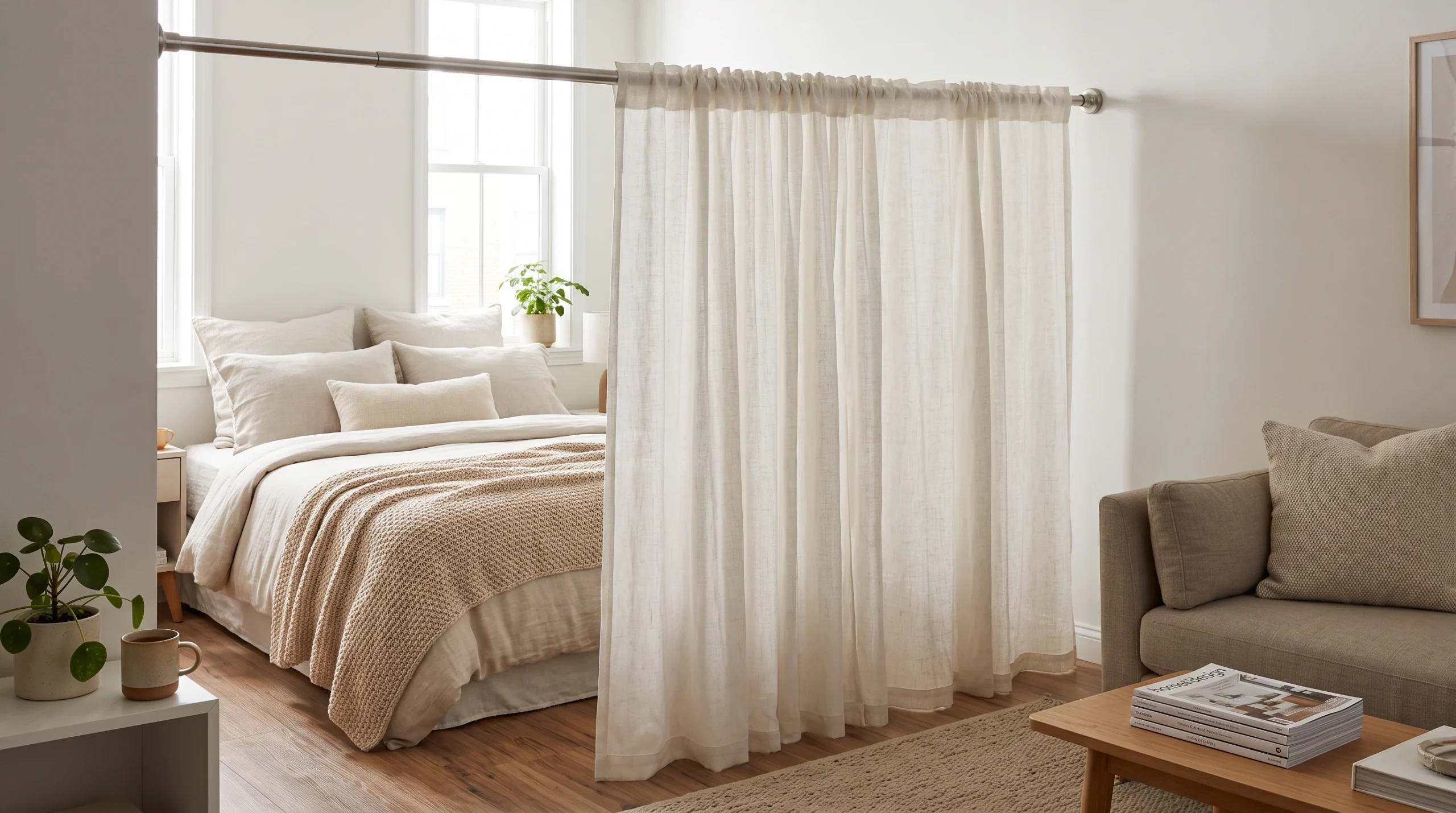
A curtain is one of the easiest ways to separate a studio bedroom from the living area.
Unlike a solid wall, a curtain can be opened when you want more light and closed when you want privacy. It also takes up very little visual space.
For a renter-friendly setup, look for a tension-based solution or another removable option that works with your rental rules. Choose a curtain that reaches close to the floor for a more finished look.
Light-colored curtains can keep the studio feeling bright, while heavier fabric can provide more visual privacy.
A curtain also gives you the flexibility to change the layout later without committing to a permanent room divider.
3. Create a Bedroom Zone Behind the Sofa
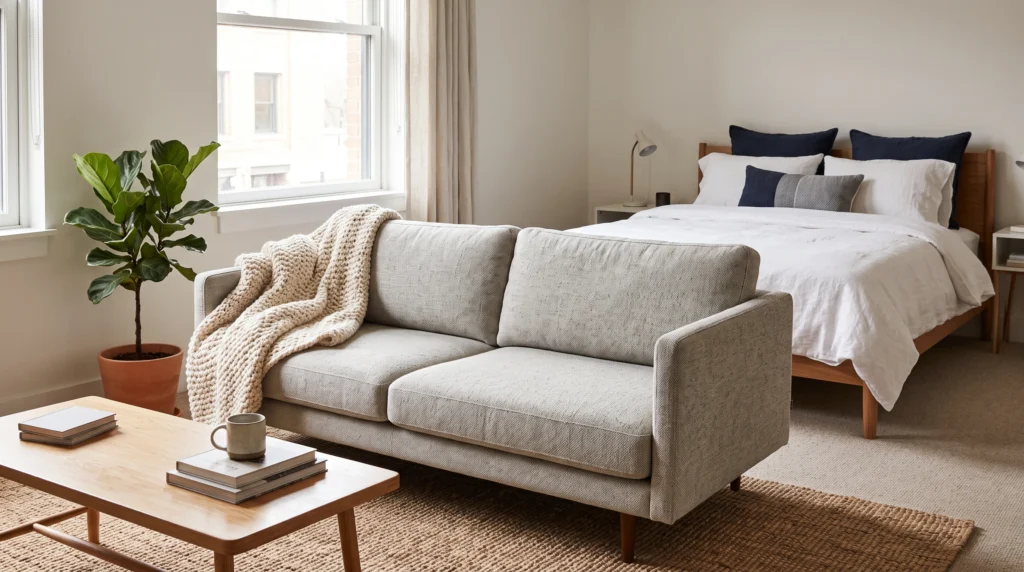
Your sofa can do more than provide seating. It can also help divide the sleeping area from the living room.
Place the sofa with its back facing the bed, leaving a clear walkway between the two zones. This creates a visual boundary without blocking light or making the studio feel closed in.
Keep the sofa and bed proportional to the room. Oversized furniture can quickly make a studio feel cramped.
A small rug under the sofa and another rug near the bed can make the two areas feel intentional without adding a physical wall.
4. Choose a Storage Bed
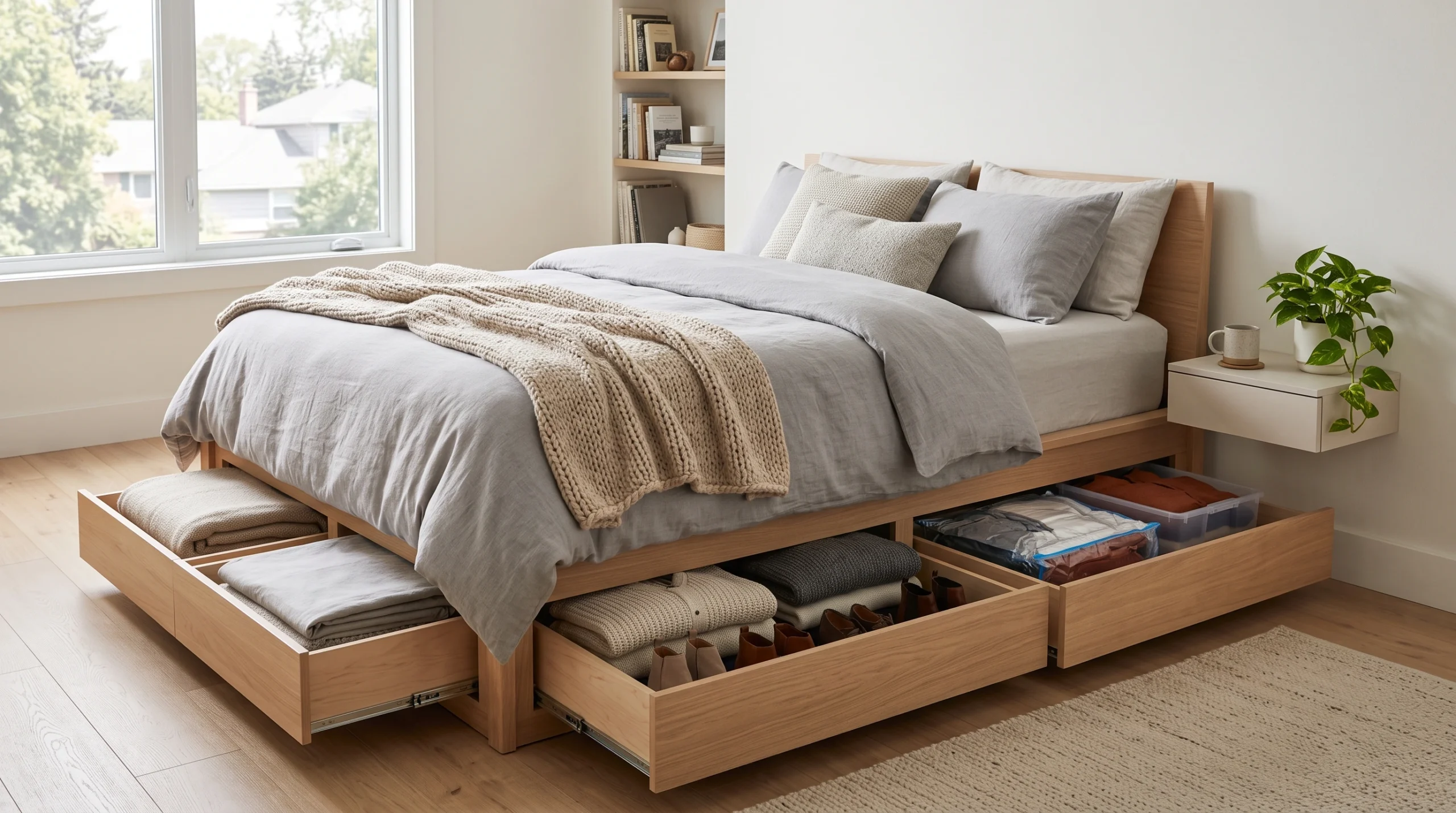
When floor space is limited, the area underneath the bed becomes valuable storage space.
A storage bed can hold bedding, seasonal clothing, shoes, or other items that would otherwise need a separate cabinet. This can reduce the amount of furniture you need around the room.
If you already have a regular bed frame, simple under-bed containers can provide a similar benefit.
Keep the containers organized so you do not have to move several boxes just to reach one item. Labeling them by category can make everyday storage much easier.
You can also combine this approach with other small bedroom storage ideas to keep the rest of the studio clear.
5. Put the Bed Against the Longest Wall
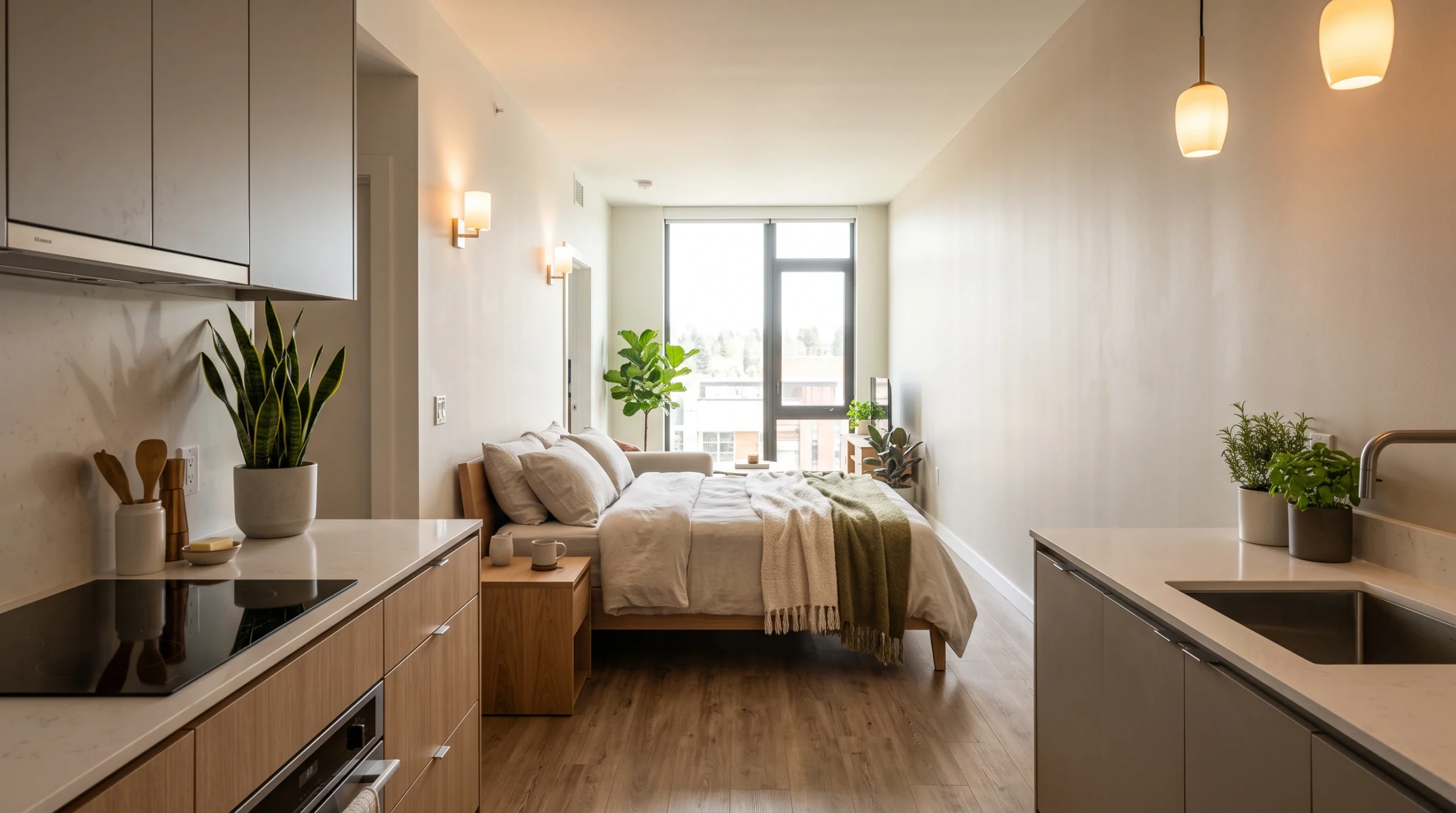
In a narrow studio, the longest uninterrupted wall may offer the most useful location for the bed.
This arrangement can leave more open floor space in the center of the apartment and create a clearer path between the entrance, kitchen, and living area.
Before moving the bed, walk through the apartment and identify the main traffic routes. You do not want the bed to sit directly in a path that you use several times a day.
If the bed must be close to the living area, use a rug, lighting, or a slim screen to give the sleeping zone its own identity.
6. Use a Bookcase as a Room Divider
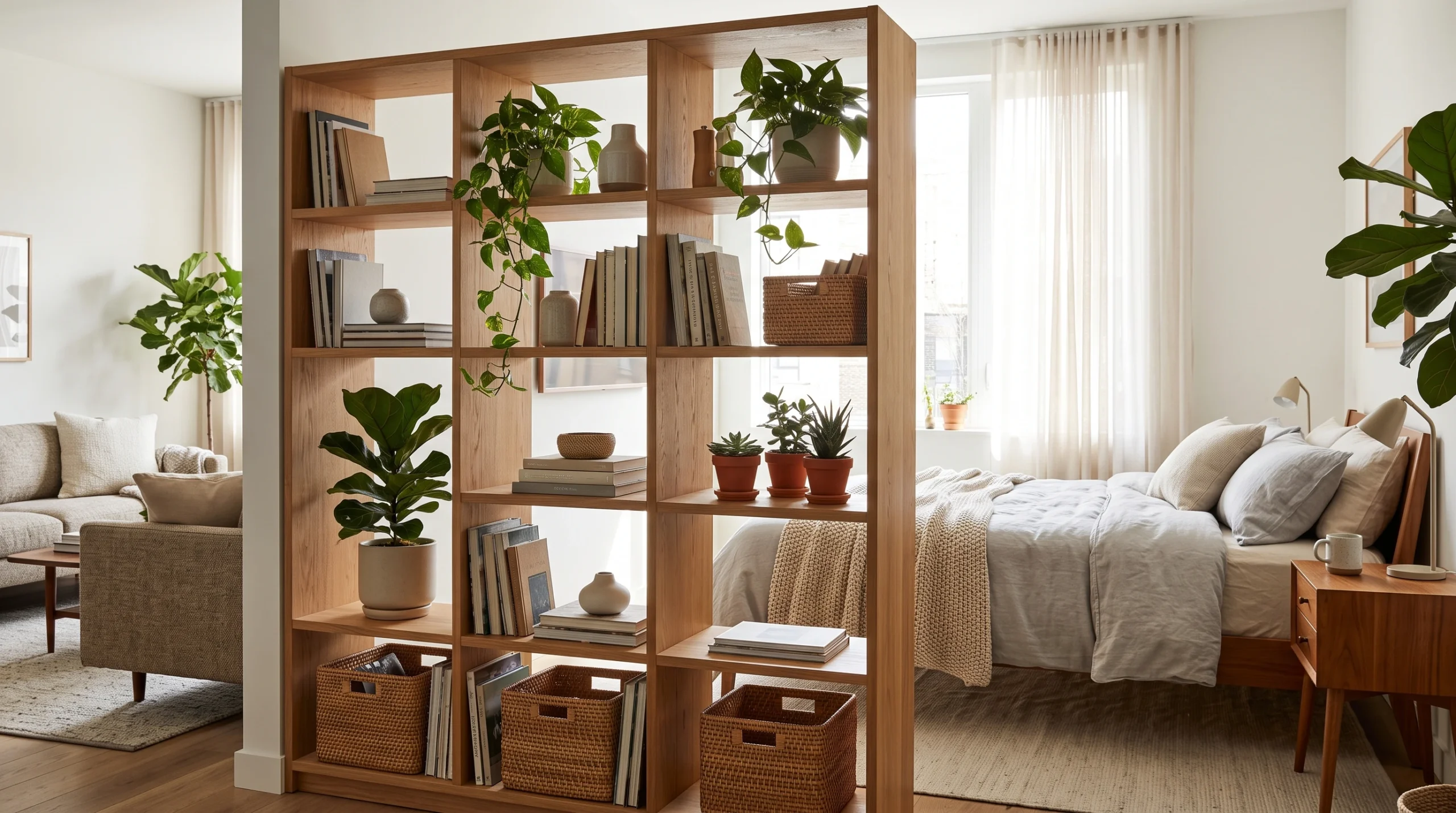
An open bookcase can separate the bedroom from the rest of the studio while still allowing light to pass through.
This works especially well when the bookcase has open shelves rather than a completely solid back.
Use a mix of books, baskets, plants, and a few decorative pieces. Avoid filling every shelf because an overcrowded bookcase can make the apartment feel visually busy.
For renters, a freestanding unit is generally more flexible than a built-in divider. If the unit is tall, follow appropriate safety guidance for securing furniture in your rental.
7. Try a Murphy Bed
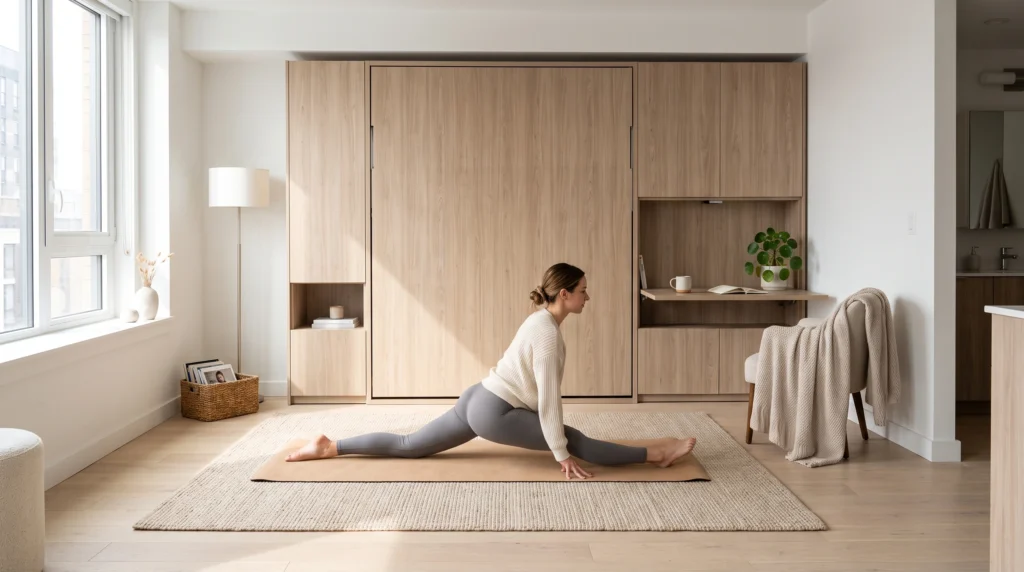
A Murphy bed can be useful when the studio serves several purposes throughout the day.
When the bed is folded away, the same floor area can become a workspace, exercise area, or open living space. This makes the layout particularly useful for very small apartments.
The main thing to consider is the wall and installation requirements. Renters should check their lease before choosing a wall-mounted system that requires permanent installation.
If installation is not practical, a compact daybed or another movable sleeping solution may offer some of the same flexibility without structural changes.
8. Put the Bed Behind a Half-Height Divider
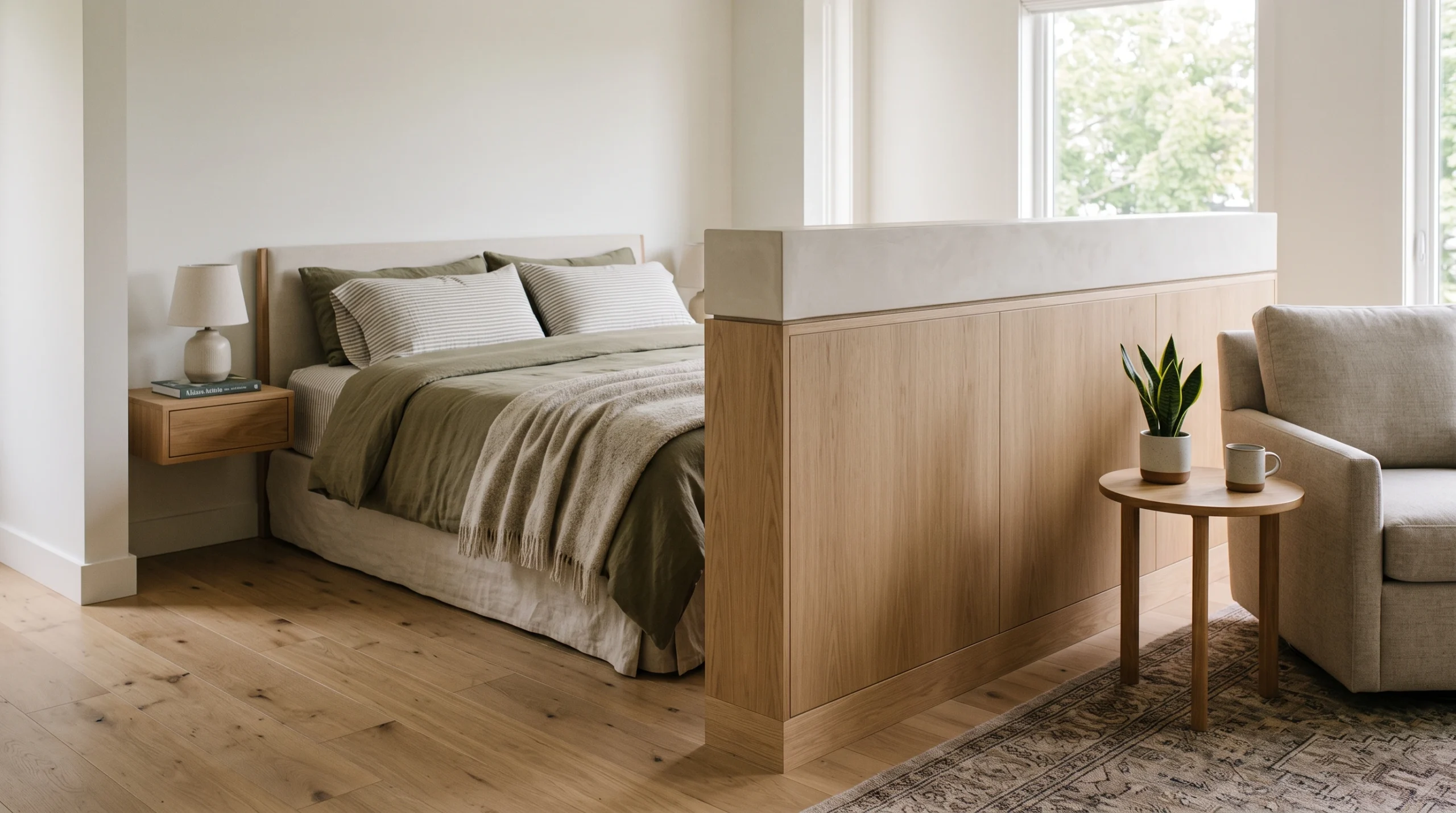
A half-height divider can create separation without making the sleeping area feel completely enclosed.
You can achieve a similar effect with a low open shelf, console, or appropriately sized furniture piece.
The advantage is that your eye still moves through the room, so the studio can feel more open than it would with a full wall.
Keep the divider low enough that it does not block natural light or interfere with movement. The goal is visual separation, not creating another cramped corner.
9. Use a Platform Bed With Built-In Storage
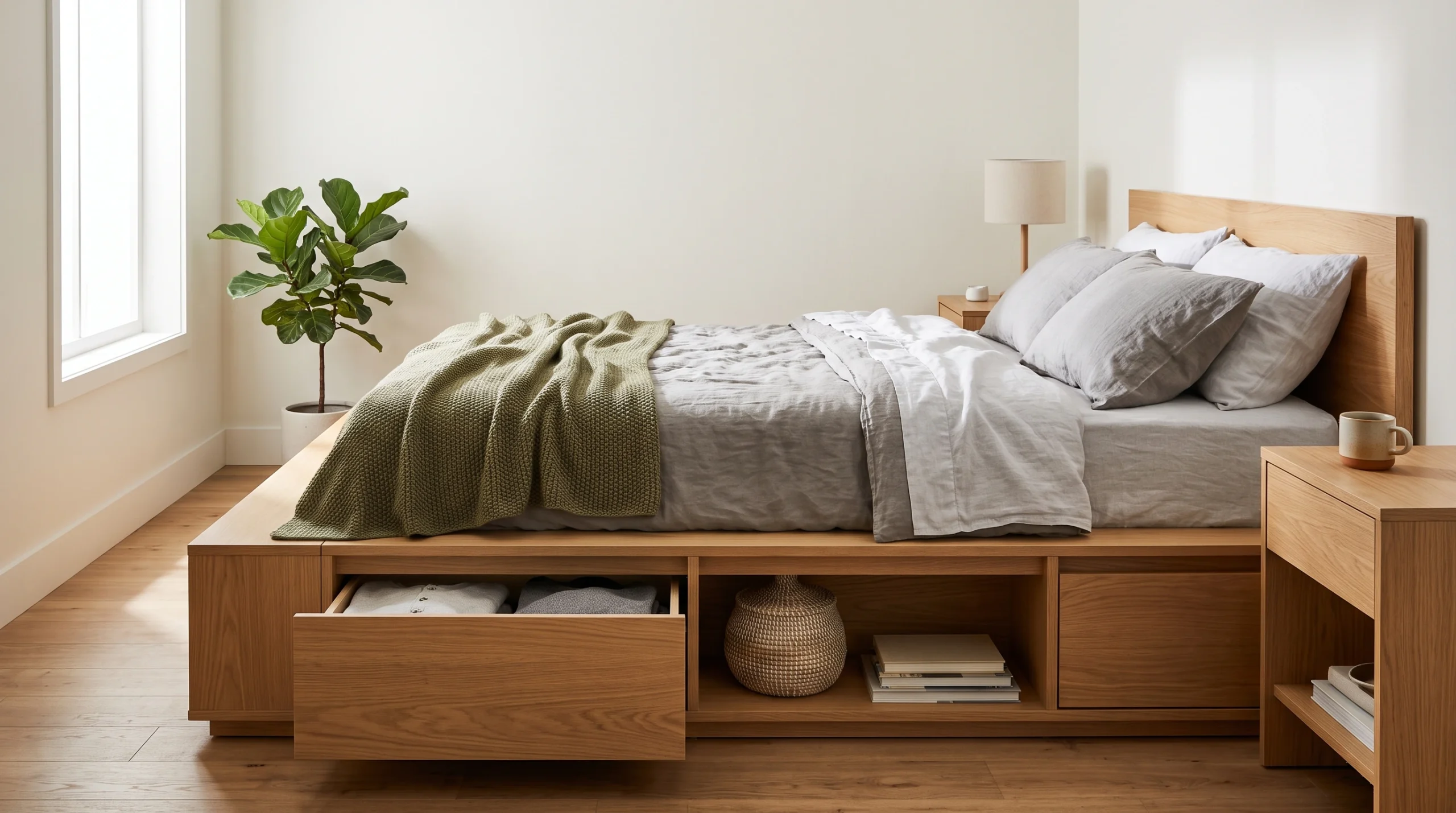
A platform bed with drawers or open storage underneath can combine two functions in one piece of furniture.
This is especially helpful when there is no room for a large dresser beside the bed.
Keep the rest of the bedroom furniture simple. For example, a compact bedside table or floating shelf may be enough when the bed already provides substantial storage.
If you need additional storage, use the vertical space on the wall rather than filling the floor with more cabinets.
10. Make a Small Bedroom Nook
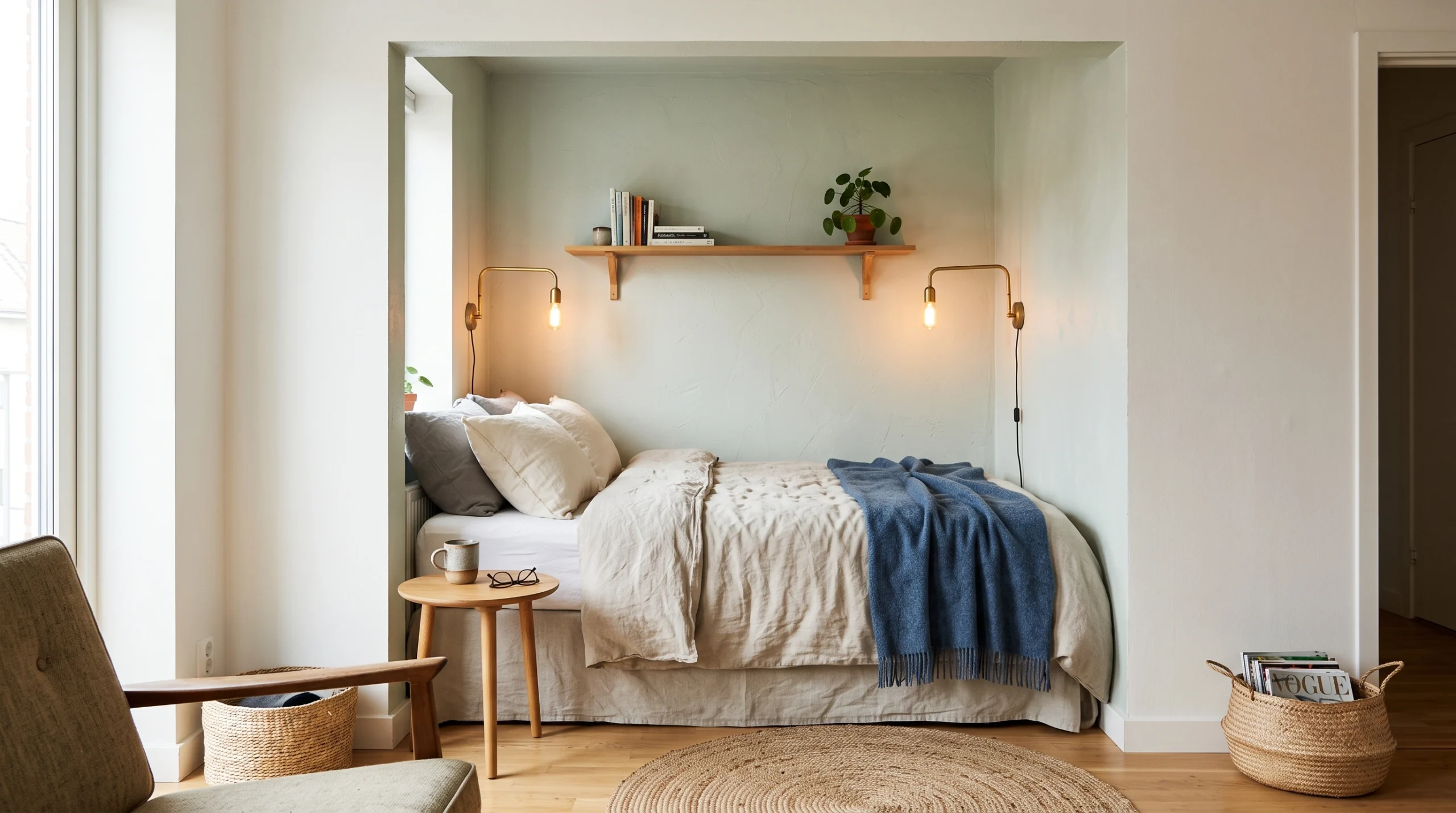
Some studios have an alcove or slightly recessed area that can naturally become a bedroom.
If your apartment has one, place the bed inside the nook and use the surrounding walls to define the space.
A small rug can mark the sleeping area, while a wall-mounted or floating nightstand can provide a place for a lamp, book, or phone without taking up floor space.
Keep colors fairly consistent between the nook and the rest of the apartment. A small space usually feels more connected when the same few colors appear throughout the room.
For more ideas about making a compact sleeping space feel larger, explore ways to make a small bedroom feel bigger.
11. Use a Privacy Screen Beside the Bed
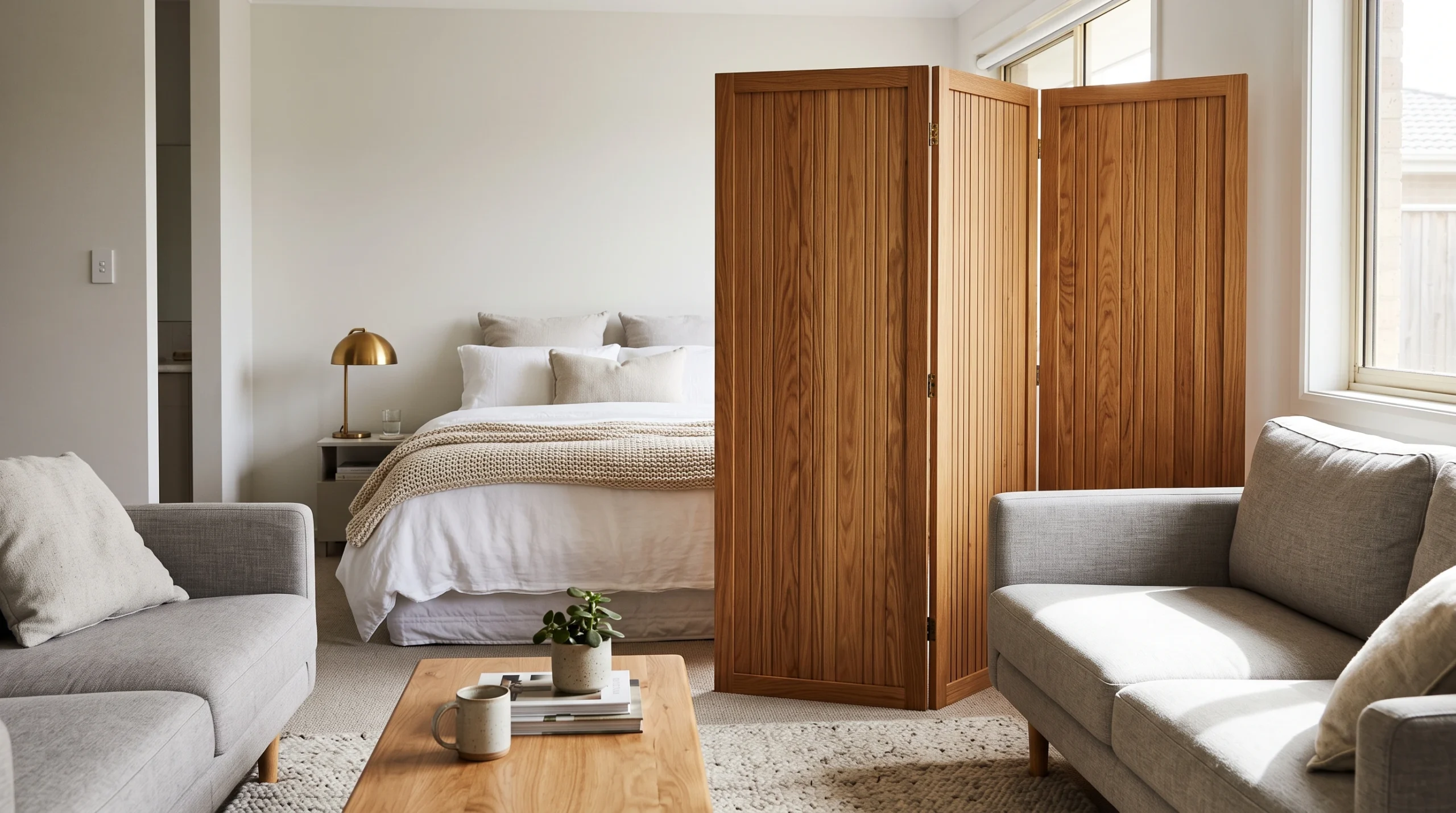
A folding privacy screen can give your bed a stronger sense of separation while remaining easy to move.
This is useful if the bed is close to the entryway or living room and you want a little privacy when guests visit.
Choose a screen that works with the scale of the apartment. A very tall or wide screen can become the main visual feature of the room and may make the studio feel smaller.
A simple wood, fabric, or woven finish can add warmth without requiring wall changes.
12. Place the Bed Near a Window Carefully
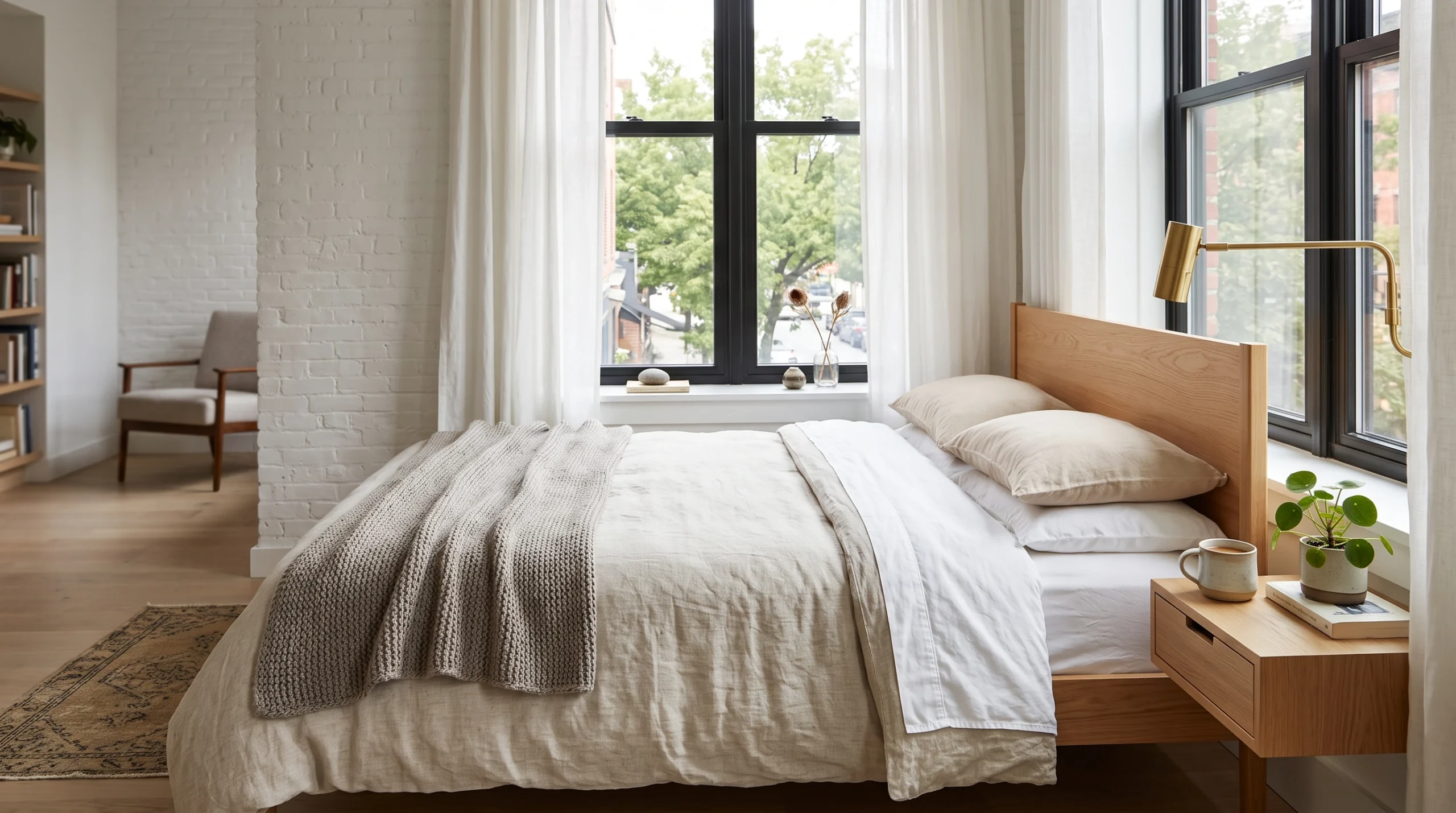
A bed near a window can make the sleeping area feel bright and pleasant, but the placement needs some thought.
Avoid blocking the window completely. Natural light is valuable in a studio, and covering the entire window with a tall bed or furniture can make the room feel darker.
Keep window access practical and use curtains that can be opened fully during the day.
If the bed has to sit near the window, a low headboard can help preserve the sense of openness.
13. Use Floating Nightstands
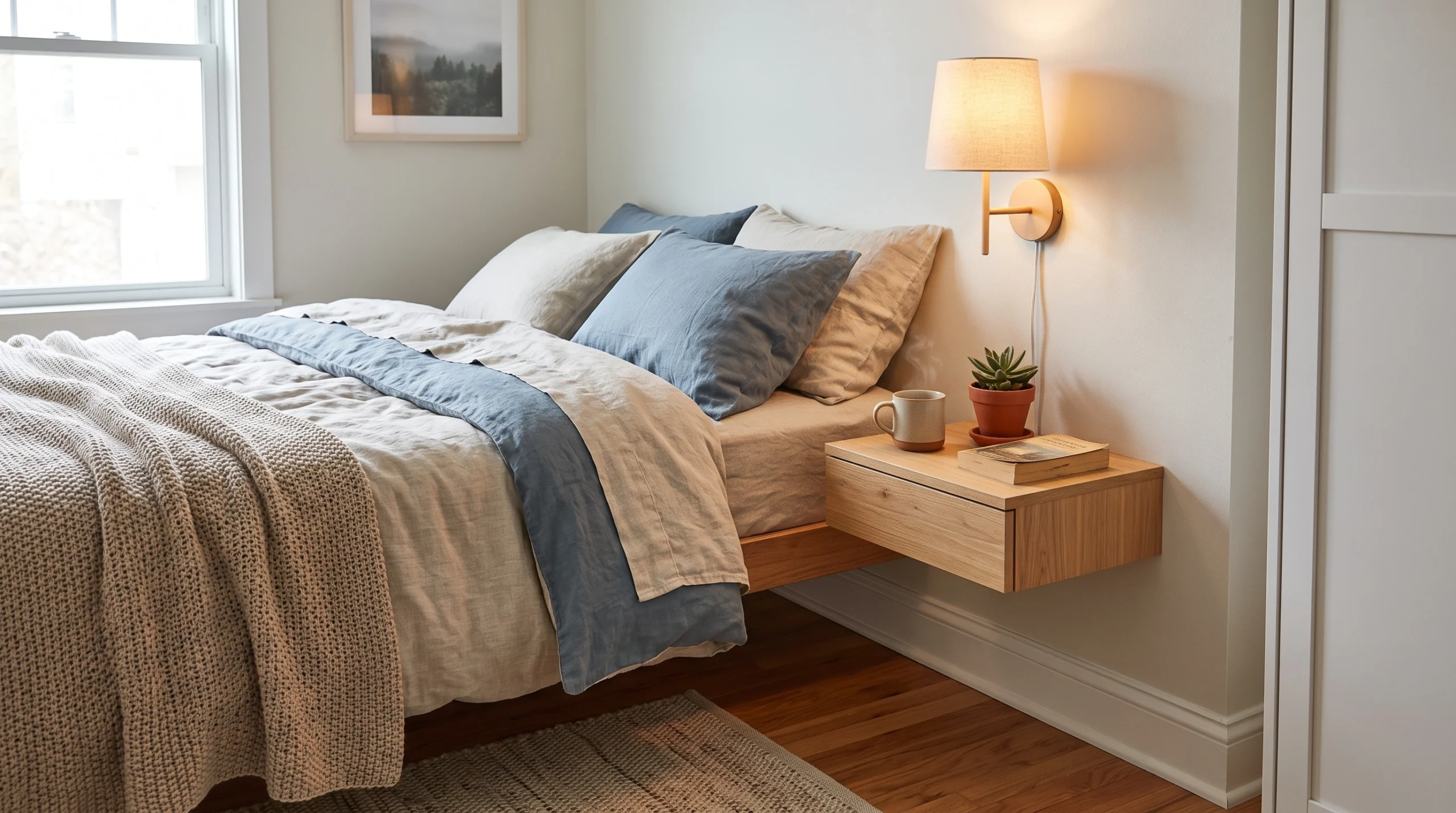
Traditional nightstands can take up more floor space than you realize.
A floating shelf can provide a small surface beside the bed while keeping the floor underneath clear. This can make cleaning easier and help a narrow bedroom zone feel less crowded.
Use the shelf for only the things you actually need beside the bed, such as a lamp, book, or small personal item.
For renters, choose an installation method that suits your lease and wall type. Removable or low-impact options may be preferable when permanent changes are not allowed.
14. Put the Bedroom Behind the Dining Area
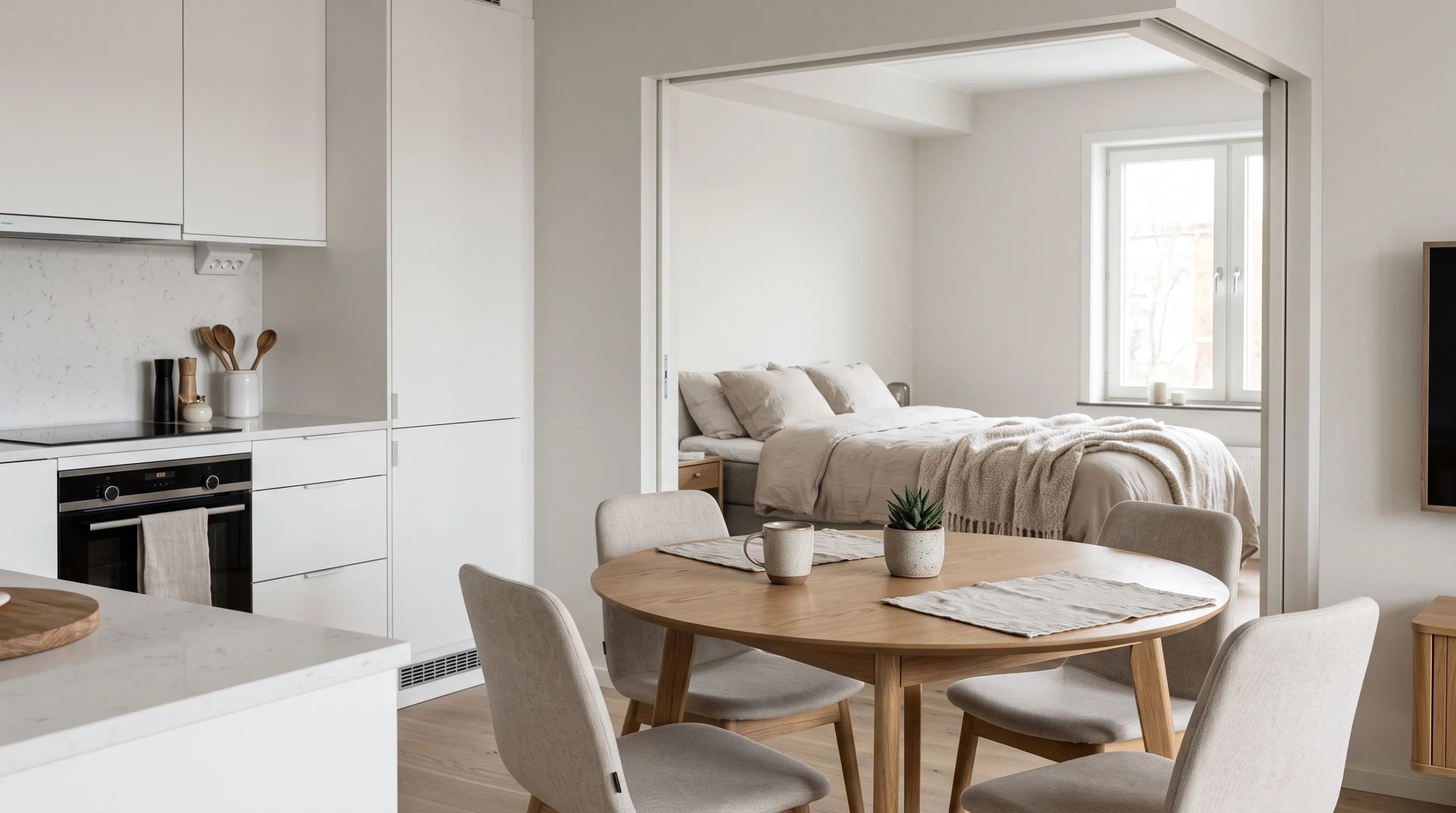
If your studio has a separate dining zone, you can sometimes use the furniture arrangement to create a natural transition toward the sleeping area.
For example, the dining table can sit between the kitchen and bedroom, creating a gradual change from one part of the apartment to another.
This works best when the furniture is kept compact. A small round table may provide enough dining space without creating a large visual barrier.
The key is to maintain a clear walking route around each zone. A clever layout is not useful if you constantly have to squeeze between furniture.
15. Create a Minimalist Open-Plan Bedroom
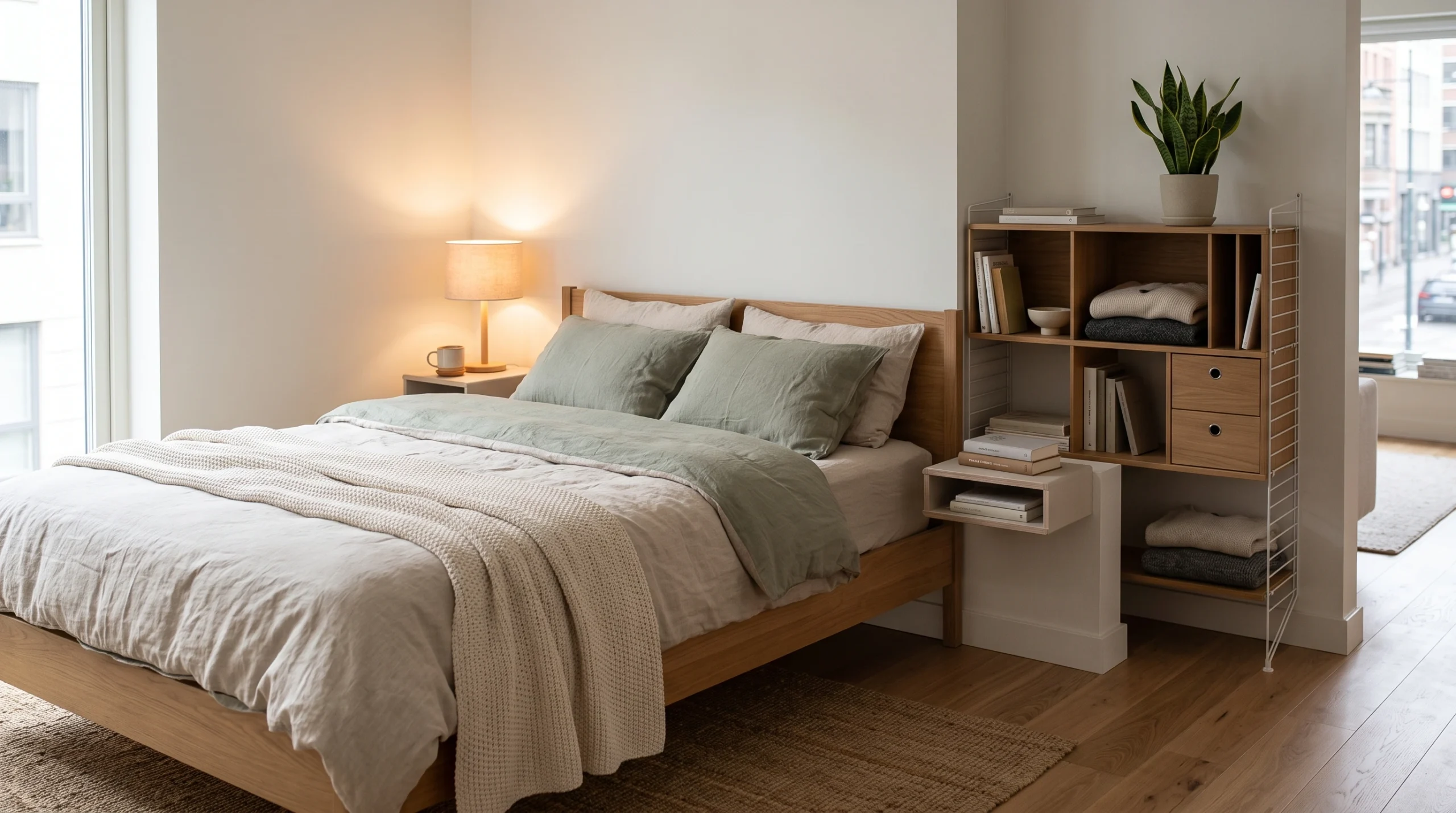
Sometimes the best studio bedroom layout is the simplest one.
Instead of trying to hide the bed completely, make it part of a calm, coordinated room. Use a simple bed frame, limited furniture, soft bedding, and one or two useful storage pieces.
Keep the floor as open as possible and avoid collecting small decorative items that do not serve a purpose.
A simple layout can make the entire apartment feel larger because there are fewer visual interruptions.
If you want to add more personality, use texture instead of lots of objects. Bedding, a rug, curtains, and soft lighting can make the bedroom feel cozy without taking over the studio.
How to Choose the Right Studio Bedroom Layout
The best arrangement depends on the shape of your apartment, where the windows and doors are located, and how you use the space every day.
Start by measuring the room before moving furniture. You do not need a detailed interior design plan. A simple sketch showing the bed, sofa, kitchen, doors, windows, and main walking routes is enough.
Then ask yourself three questions:
Where is the main walking path?
Keep the route from the entrance to the kitchen, bathroom, and living area as clear as possible.
Avoid placing furniture where you naturally walk. Even a beautiful layout can become frustrating if you have to walk around the bed every time you enter the apartment.
Where does natural light enter?
Try not to create a solid barrier between your main living area and the windows.
Open shelves, curtains, low furniture, and carefully placed screens can provide separation while allowing light to move through the studio.
What needs to be stored?
Think about storage before adding decorative furniture.
If you have limited closet space, choose pieces that perform more than one job. A storage bed, floating shelf, ottoman, or compact cabinet can reduce the need for several separate items.
Simple Ways to Make a Studio Bedroom Feel More Separate
You do not always need a wall to make a bedroom feel like a bedroom.
Use a consistent group of colors for the sleeping area and repeat one or two textures. A rug can visually anchor the bed, while a small lamp can create a warmer atmosphere in the evening.
You can also use furniture orientation to establish boundaries. The back of a sofa, an open bookcase, or a narrow console can subtly tell the eye where one zone ends and another begins.
For more decorating inspiration, these small bedroom decor ideas can help you style the sleeping area without filling it with unnecessary furniture.
Common Studio Bedroom Layout Mistakes to Avoid
Blocking the main walkway
A bed or divider should not make it difficult to move around the apartment. Always test the walking route before finalizing the arrangement.
Using too many large pieces
A large bed, large sofa, large dresser, and large dining table can quickly overwhelm a studio.
Choose furniture based on the actual size of the room rather than the size of furniture you might use in a larger home.
Blocking natural light
A tall divider placed directly in front of a window can make the entire studio feel darker.
Use open or low dividers when possible.
Ignoring vertical space
If the floor is full, look upward. Shelves, tall storage, and wall space can provide useful organization without taking up more floor area.
Making every area match perfectly
A studio needs to feel connected, but every zone does not have to look identical.
Use a few repeated colors and materials to create flow while allowing the bedroom, living room, and dining area to have slightly different personalities.
Renter-Friendly Ways to Define Your Bedroom
Renters have plenty of options for creating separation without making permanent changes.
Try:
- Freestanding bookcases
- Folding privacy screens
- Curtains using suitable removable solutions
- Freestanding clothing racks
- Open shelving
- Area rugs
- Floor lamps
- Removable wall decor
- Furniture placement
- Storage benches
- Floating-style furniture where installation is allowed
Before installing anything, check your lease and use methods that are appropriate for your walls and rental agreement.
The goal is to create a bedroom zone that can be changed or removed when you move.
How to Make a Small Studio Bedroom Feel Bigger
Keep the floor visible wherever possible. Furniture with legs can create a lighter visual effect than bulky pieces that sit directly on the floor.
Use mirrors thoughtfully, especially where they can reflect natural light or an open part of the room. Keep window areas clear during the day so the apartment gets as much natural light as possible.
A simple color palette can also help the different zones feel connected. You do not need an all-white studio; soft neutrals, muted colors, and natural textures can work well too.
Most importantly, avoid filling empty space just because it is available. In a studio, some empty floor area is useful.
A Simple Layout Plan for a Small Studio
If you are starting from scratch, try this basic arrangement:
- Place the bed against the least disruptive wall.
- Keep the main walking route open.
- Position the sofa so it helps define the living area.
- Add one visual divider if you need more privacy.
- Use under-bed or vertical storage before adding another large cabinet.
- Add a rug to anchor the bedroom.
- Keep the area around windows open.
- Use compact lighting instead of taking up valuable surfaces.
- Remove furniture that does not serve a clear purpose.
- Live with the arrangement for a few days before making permanent changes.
Small changes can reveal problems that are not obvious when you first arrange the room.
Frequently Asked Questions
What is the best place to put a bed in a studio apartment?
The best location depends on the room shape, windows, doors, and walking paths. In many studios, placing the bed against a less-used wall or in a natural corner helps create a clear sleeping zone while keeping the main living area open.
How can I separate my bedroom from my living room in a studio?
You can use curtains, an open bookcase, a folding screen, the back of a sofa, a low shelf, or simply different rugs and lighting. These options create visual separation without requiring a permanent wall.
How do I make a studio bedroom feel private?
A curtain or folding privacy screen can provide the strongest simple separation. If you prefer an open layout, position the bed away from the entrance and use furniture to create a subtle visual boundary.
What furniture saves the most space in a studio bedroom?
Multifunctional furniture is especially useful. Storage beds, floating shelves, compact nightstands, and furniture that serves more than one purpose can reduce the amount of floor space you need.
Can I create a bedroom area without building a wall?
Yes. A studio bedroom can be defined with furniture placement, rugs, curtains, open shelving, lighting, and freestanding screens. These approaches are also easier to change when your needs or rental situation change.
How do I keep a studio bedroom from looking cluttered?
Start with the essentials and give each item a clear place. Use hidden, under-bed, and vertical storage, keep walking paths open, and avoid adding furniture simply to fill empty areas.
Make Every Part of Your Studio Work
A small studio does not need a complicated layout. The most useful approach is to give each part of the apartment a clear purpose while keeping enough open space for comfortable movement.
Start with the bed, then build the rest of the layout around your main walking route, natural light, and storage needs. Add a curtain, shelf, rug, or screen only when it solves a real problem.
With the right studio bedroom layout, even a compact open-plan apartment can have a comfortable sleeping area, useful storage, and a living space that still feels open.