A rental bedroom can feel personal and finished without painting walls, drilling into them, or making changes your landlord may not allow. The key is to focus on pieces you can move, remove, and take with you when your lease ends.
The best renter-friendly bedroom ideas work with what you already have. A better furniture layout, layered bedding, soft lighting, removable wall decor, and smart storage can change the feel of the room without a major renovation. Even a small bedroom can look thoughtful when every piece has a purpose.
Below are practical ways to make a rental bedroom feel more comfortable, balanced, and designed while keeping the changes temporary.
1. Start With the Bed as the Main Focal Point
The bed is usually the largest piece of furniture in a bedroom, so it naturally draws attention. Instead of trying to decorate every wall and corner, make the bed look intentional first.
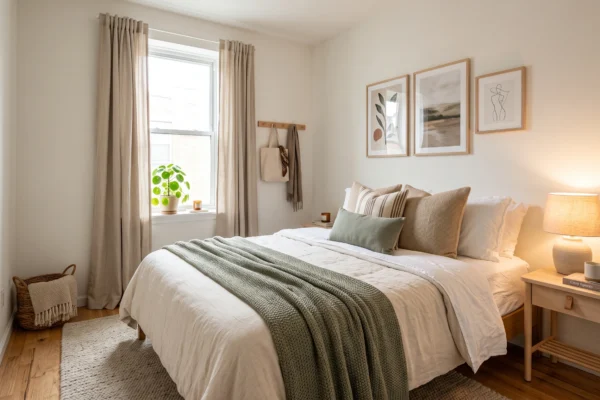
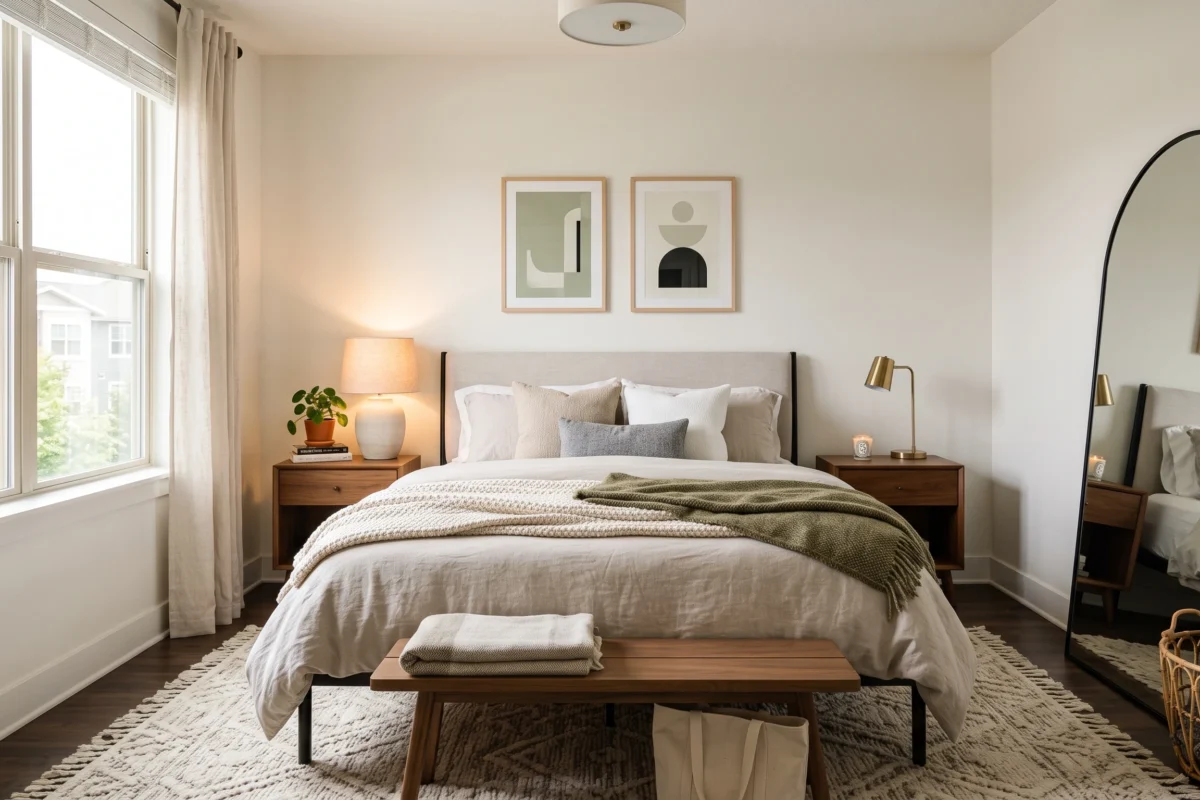
Start with simple bedding in two or three colors. For example, white bedding with warm beige and muted green accents can create a calm look without making the room feel busy.
Add a folded blanket at the foot of the bed and two or three pillows in different sizes. You do not need a large collection of pillows. A few well-chosen layers are enough to make the bed look finished.
If the rental came with a basic bed frame, you can also add a removable headboard or use a freestanding headboard that does not need to be attached to the wall.
Keep the color palette simple
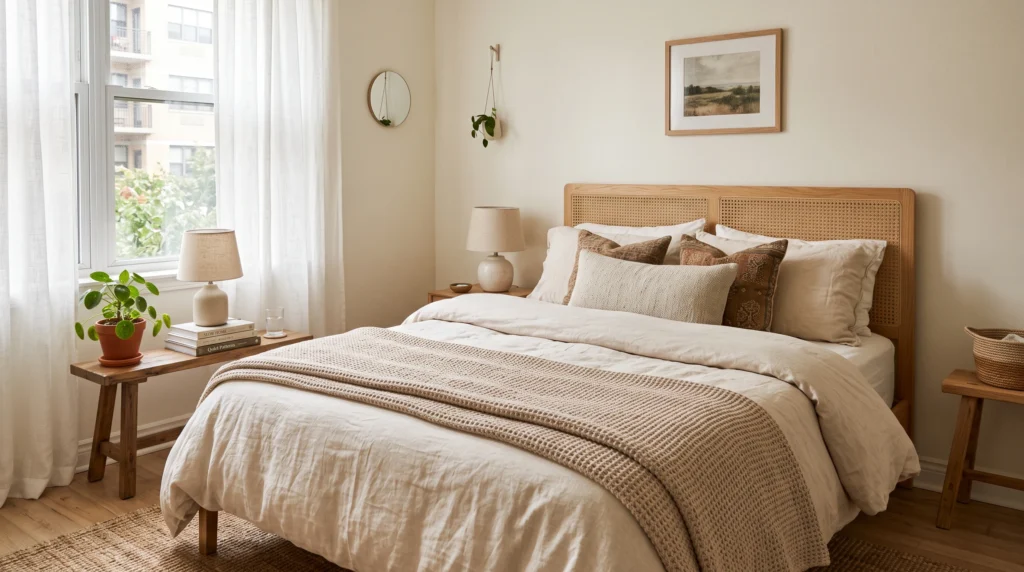
A small bedroom can feel crowded when too many colors compete for attention. Choose one main color, one supporting shade, and a small accent color.
For example:
- Cream bedding
- Warm wood furniture
- Soft terracotta accents
This creates visual consistency without requiring permanent changes.
2. Use a Freestanding Headboard for More Style
A headboard can make a basic bed feel much more complete. But renters do not always have the option of attaching one to the wall.
A freestanding headboard is a simple alternative. It can sit behind the bed without becoming a permanent part of the room.
For a softer bedroom, consider an upholstered design. For a more natural look, wood or rattan can add texture without making the room feel heavy.
Another option is to create the look of a headboard with removable wall materials, such as peel-and-stick panels. Always check the product instructions and test a small hidden area first to make sure it is suitable for your rental wall.
3. Create a Feature Wall Without Permanent Paint
You do not need to paint an entire bedroom to create a feature wall.
Removable wallpaper is one option when the rental allows it. Choose a subtle pattern or soft color behind the bed rather than covering every wall. This gives the room a clear focal point while keeping the rest of the space simple.
If wallpaper is not suitable for your walls, try renter-friendly wall decor instead.
A group of lightweight prints, fabric art, or removable decals can create a similar visual effect.
The goal is to make one area feel intentional rather than filling every available wall.
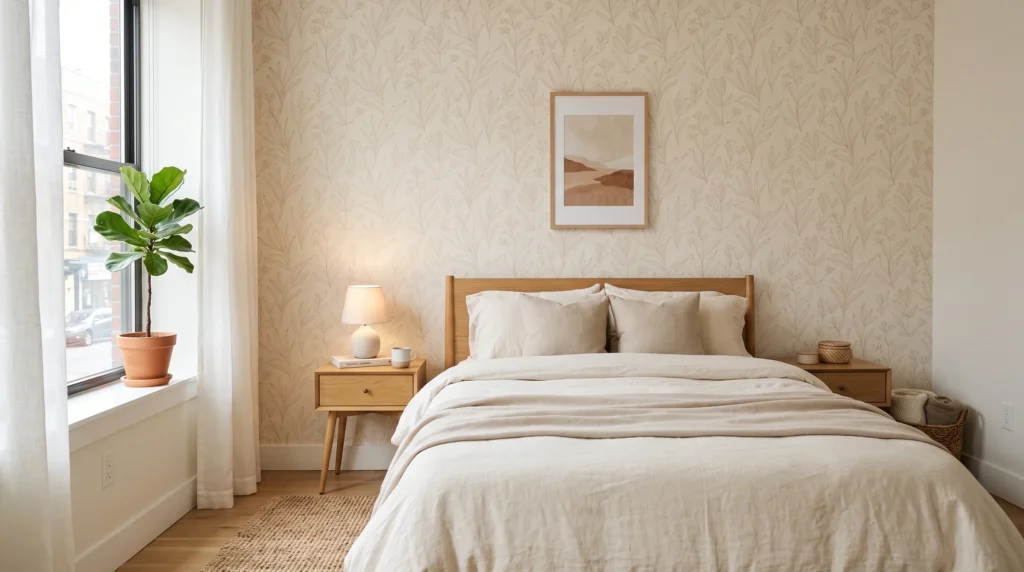
4. Try a Gallery Wall Without Drilling
Blank walls can make a bedroom feel unfinished, but renters often worry about holes and damage.
Removable picture-hanging strips or renter-safe hooks can help with lightweight artwork when used according to the manufacturer’s instructions.
Before hanging anything, place the frames on the floor and experiment with the arrangement. This makes it easier to find a balanced layout before putting anything on the wall.
You could use:
- Three matching prints
- A mix of small and medium frames
- Simple botanical artwork
- Personal photos
- Minimal line drawings
- A combination of art and small decorative pieces
Keep some space between the pieces. A gallery wall usually looks more organized when the arrangement has a clear shape rather than appearing randomly scattered.
5. Add a Large Mirror to Reflect Light
A mirror can be especially useful in a small or dark bedroom.
Place it where it can reflect natural light from a window or brighten a darker part of the room. A large mirror can also make the space feel less closed in because it adds another visual layer.
For renters, a leaning floor mirror is particularly useful because it does not need to be permanently attached to the wall. Just make sure it is placed somewhere stable and safe.
If floor space is limited, a lightweight wall mirror can work with an appropriate rental-safe hanging method.
6. Make the Lighting Feel Softer
Harsh overhead lighting can make even a well-decorated bedroom feel cold.
Instead of relying on one ceiling light, use several smaller light sources around the room. A bedside lamp, floor lamp, or plug-in wall light can create softer layers of light.
Rental-safe lighting is especially useful when you want the look of a wall fixture without changing the electrical wiring.
When choosing lighting, think about the mood you want at night. A warm, soft light usually feels more relaxing than a very bright white light.
You can also place a small lamp on a nightstand or dresser to create a comfortable glow without changing anything permanent.
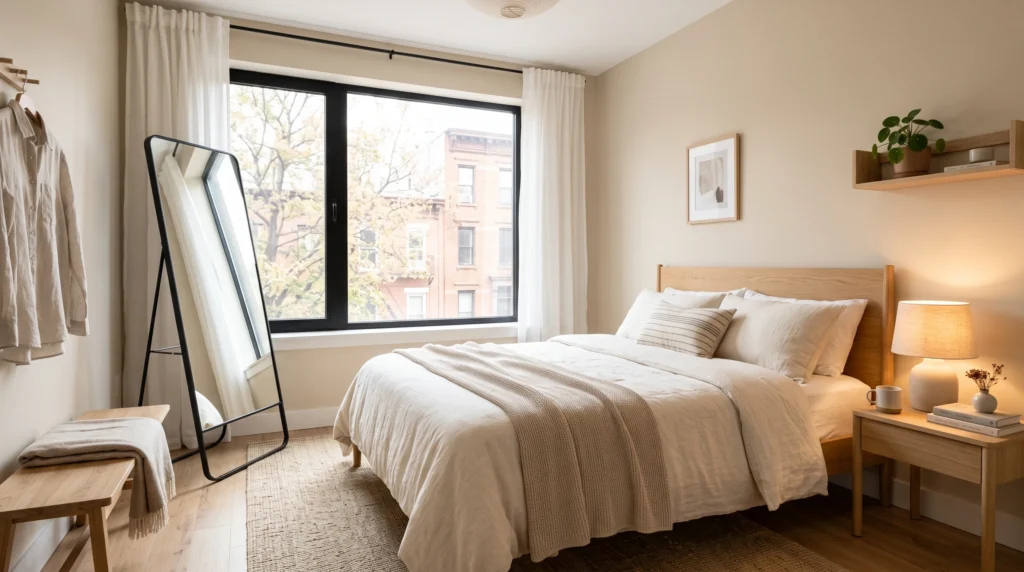
7. Use Plug-In Lighting Instead of Hardwiring
Wall lighting can add a finished look, but hardwiring a fixture is rarely practical in a rental.
A plug-in wall light can give you a similar effect without electrical work. Use a suitable cord-management solution to keep the cable neat and reduce visual clutter.
Another simple option is a small floor lamp beside the bed.
This can be especially helpful when you do not have enough space on a nightstand for a lamp.
8. Add a Rug to Define the Bedroom
A rug can make a bedroom feel warmer and more finished while also helping separate the sleeping area from the rest of the room.
You do not need to cover the entire floor. A rug placed partly under the bed can create a clear visual zone.
For a larger bed, choose a rug that extends beyond the sides of the bed. In a smaller bedroom, a smaller rug placed beside or at the foot of the bed can still add softness without taking over the floor.
If the room already has several patterns, choose a simple rug. If the bedding and furniture are plain, a subtle pattern can add interest.
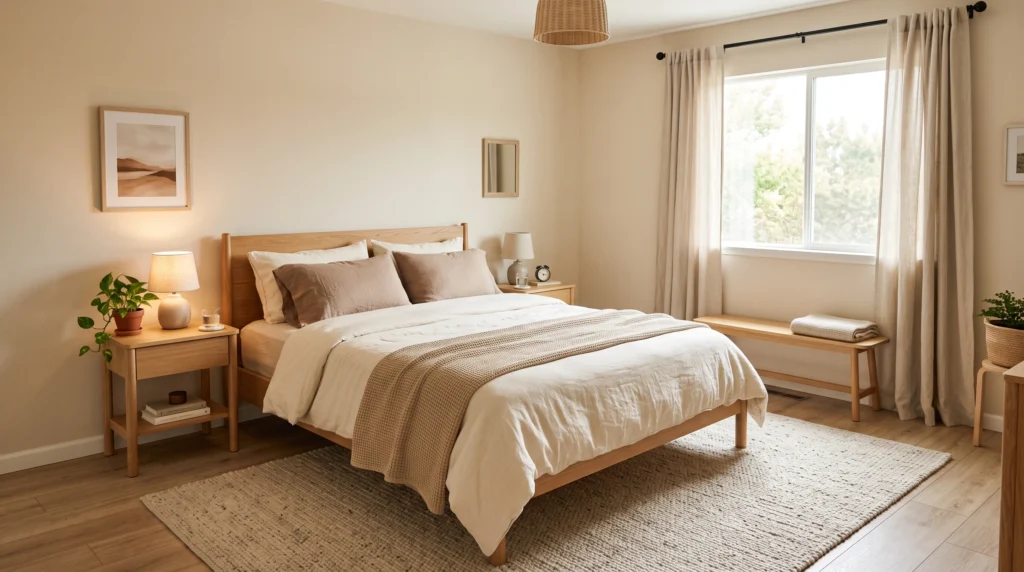
9. Use Curtains to Soften the Room
Bare windows can make a bedroom feel less comfortable.
Curtains add softness and can also help make the room feel taller when they are positioned higher than the window frame. If drilling is not allowed, look for tension rods or other rental-friendly hanging options that suit your window.
Choose curtains that work with the existing colors in the room.
Light-colored curtains can keep a small bedroom feeling airy, while heavier fabric can create a warmer, more enclosed feeling.
Avoid choosing curtains that are much too short. A length that reaches close to the floor usually creates a more finished appearance.
10. Make Better Use of Vertical Space
When floor space is limited, look upward.
The wall area above a dresser, desk, or nightstand can often be used for storage or decoration. Renters can use removable hooks, lightweight shelves where appropriate, or freestanding storage pieces.
Vertical space can be useful for:
- Small baskets
- Artwork
- Hanging organizers
- Lightweight decor
- Scarves or accessories
- Small plants
Do not fill every inch of wall space. Leaving some empty areas helps the bedroom feel calmer.
11. Choose Storage That Can Move With You
One of the best renter-friendly upgrades is storage that does not depend on the apartment itself.
A narrow dresser, storage bench, rolling cart, or freestanding shelf can solve a storage problem without changing the room permanently.
Look for furniture that fits the actual dimensions of your bedroom. A large storage unit may hold more items, but it can make a small room harder to move around in.
Before buying or bringing in another piece, measure the available space and consider how doors, drawers, and walkways will work.
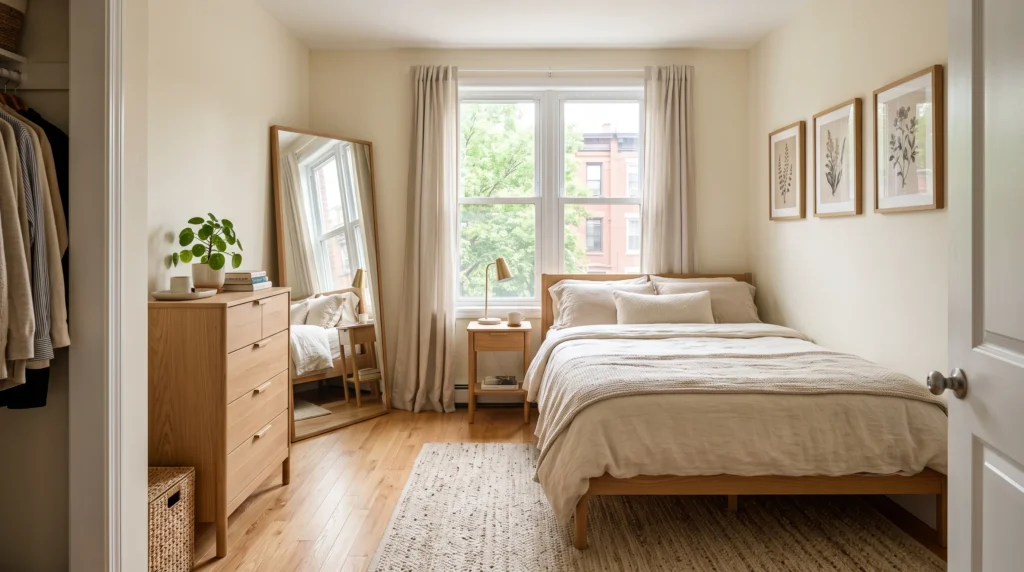
12. Use the Space Under the Bed
The area under the bed is easy to ignore, but it can hold items you do not need every day.
Use low storage boxes or bags for things such as:
- Seasonal clothing
- Extra bedding
- Shoes
- Travel items
- Keepsakes
Choose containers that are easy to pull out. If you need to move several heavy boxes every time you want one item, the storage system will quickly become frustrating.
Keeping under-bed storage organized also makes moving easier when your lease ends.
13. Make a Small Nightstand Work Harder
A nightstand does not need to be large to be useful.
If space is tight, choose a narrow table or small cabinet that gives you enough room for the essentials. Keep the surface simple with only a lamp, a book, and perhaps one small decorative item.
You can also use the lower part of the nightstand for baskets or additional storage.
The important thing is to avoid turning the nightstand into a catch-all. A clear surface makes the whole bedroom feel more organized.
14. Use Matching Pieces for a More Designed Look
A bedroom does not need expensive furniture to look put together.
One easy trick is to repeat certain materials, colors, or shapes.
For example, if your nightstand has warm wood tones, you could repeat that color in a small picture frame or storage basket. If your bedding has curved shapes, you might use a rounded mirror or lamp nearby.
These small connections help different pieces feel like they belong together.
You do not need a matching bedroom set. In fact, a few different pieces can make the room feel more personal.
15. Add Texture Instead of More Color
If the bedroom feels flat, adding more colors is not always the answer.
Texture can create interest without making the room look busy.
Try combining materials such as:
- Cotton bedding
- A woven basket
- A soft rug
- A knitted throw
- A wood nightstand
- A fabric headboard
This creates visual variety while keeping the color palette calm.
Texture is especially useful in neutral bedrooms where the walls and large furniture pieces cannot be changed.
16. Bring in Plants Without Creating Extra Work
A small plant can add life to a bedroom, but you do not need to turn the room into an indoor garden.
One or two plants on a dresser, shelf, or small stand may be enough.
If natural light is limited, choose plants based on the conditions available in your room. You can also use realistic artificial plants if caring for live plants is not practical.
Keep plants away from places where water could damage furniture or flooring.
17. Create a Cozy Corner in an Unused Area
If you have an empty corner, give it a purpose.
A small chair with a floor lamp can create a reading area. A compact bench can provide a place to sit while getting dressed. Even a small basket and floor cushion can make an awkward corner feel intentional.
In a small bedroom, avoid filling the corner simply because there is space available.
First ask what the room is missing. If you need storage, use the corner for storage. If you already have enough storage, create a comfortable sitting area instead.
18. Make a Small Bedroom Feel More Open
Small bedrooms benefit from simple furniture choices and clear walking paths.
Start by removing anything you do not use. Then position the largest pieces so you can move around the room easily.
A few changes can make a noticeable difference:
- Keep the floor as clear as possible.
- Avoid oversized furniture.
- Use furniture with visible legs when suitable.
- Keep window areas open.
- Use mirrors to reflect light.
- Choose bedding that does not overwhelm the room.
- Use vertical storage instead of adding more floor furniture.
The goal is not to make the bedroom look empty. It is to give each piece enough room to breathe.
For more practical ways to open up a compact room, see these tips on how to make a small bedroom feel bigger.
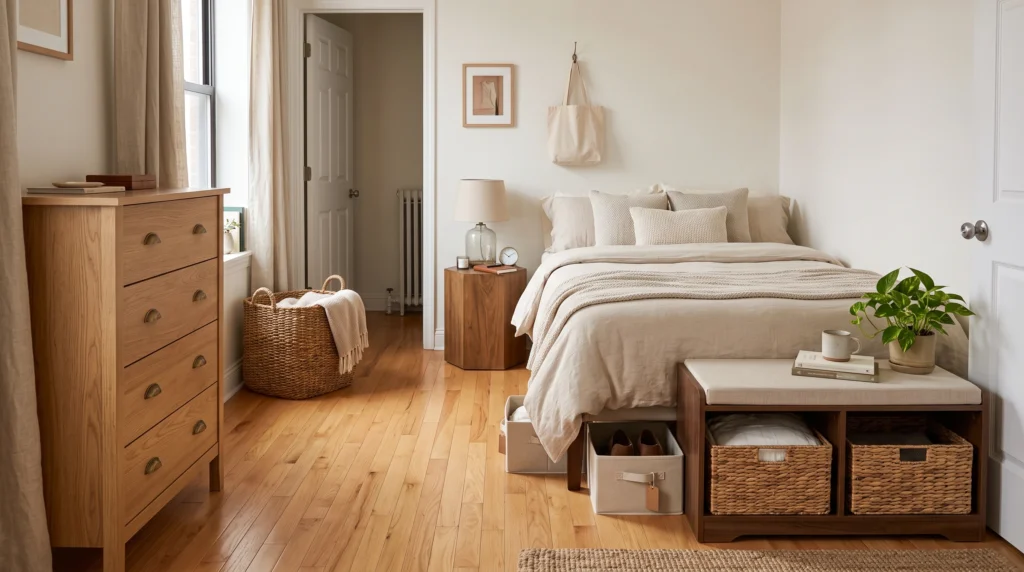
19. Use Removable Decor for Personality
A rental bedroom should still feel like your bedroom.
Removable decor lets you add personality without making permanent changes. Try artwork, fabric wall hangings, removable decals, lightweight mirrors, or temporary wallpaper where appropriate.
You can also personalize the room through things that do not touch the walls at all.
Books, bedding, lamps, rugs, baskets, plants, and small decorative objects can say a lot about your style.
This is often the easiest way to make a rental feel less generic.
If you’re working with limited space, these small bedroom decor ideas can help you add style without making the room feel crowded.
20. Create a Calm Color Palette
Color can change how a bedroom feels even when the walls stay exactly as they are.
If the rental walls are white, cream, or light gray, use those colors as your starting point. Add warmth through bedding, rugs, curtains, and small accessories.
For a calm bedroom, consider combinations such as:
Warm neutral
Cream + beige + light wood
Soft earthy
Off-white + muted green + terracotta
Cool and simple
White + soft gray + dusty blue
Warm and cozy
Cream + brown + muted rust
You do not have to follow a strict color scheme. The idea is simply to repeat a few colors so the room feels connected.
21. Hide Everyday Clutter
Even a beautifully decorated bedroom can feel messy when everyday items are left in sight.
Give common items a specific home. Use baskets for loose accessories, trays for small objects, and drawer organizers for things that tend to spread across surfaces.
A simple rule can help: if an item is used every day, keep it easy to reach. If it is rarely used, store it somewhere less visible.
This keeps the room practical without covering every surface with storage containers.
22. Use a Bench or Ottoman at the Foot of the Bed
If there is enough room, a small bench or ottoman at the foot of the bed can add both function and style.
It can provide a place to sit, hold a folded blanket, or store small items.
For a small bedroom, choose a narrow piece that does not block the walking path. Storage ottomans can be particularly useful because they combine seating with hidden storage.
Because the piece is freestanding, it can move with you to your next home.
23. Avoid Making Everything Perfectly Matching
A rental bedroom can look more interesting when every item does not come from the same set.
Mixing old and new pieces, different textures, and slightly different shapes can make the room feel more personal.
The trick is to create some connection between the pieces. Repeat a color, material, or finish rather than matching everything exactly.
This approach is also useful for renters because you can work with furniture you already own instead of replacing everything.
24. Make the Bedroom Feel Finished With Small Details
Sometimes the room does not need another large piece of furniture. It needs a few small finishing touches.
Look at the areas you see most often.
Maybe the bed needs better bedding. Perhaps the nightstand looks empty, or the window needs curtains. The wall above the dresser may need one large piece of art.
Fix those weak spots first.
A finished bedroom is usually less about having more things and more about making the existing pieces work together.
Common Renter Bedroom Decorating Mistakes
Using too much decor
Adding more items does not always make a bedroom feel more finished. Too many accessories can create visual clutter.
Start with the largest areas first, such as the bed, rug, curtains, and lighting. Add smaller decor only when the room still needs something.
Choosing furniture that is too large
Always measure before adding furniture.
A dresser that looks reasonable in a store can take up a large part of a small bedroom. Leave enough space to open drawers and walk comfortably around the room.
Ignoring lighting
A bedroom with good furniture can still feel uncomfortable under one bright ceiling light.
Add smaller light sources where possible to create softer areas around the room.
Hanging everything at the wrong height
Artwork and mirrors that are placed too high can make the room feel disconnected.
Before hanging anything, step back and look at the relationship between the artwork, furniture, and eye level.
Making permanent changes too quickly
Before painting, drilling, replacing fixtures, or applying anything directly to a wall, check your lease.
A temporary solution may take a little more planning, but it can save you from repair work later.
How to Put These Renter-Friendly Bedroom Ideas Together
You do not need to change your entire bedroom at once.
Start by looking at the room from the doorway. Decide what feels wrong. Is it too dark? Too empty? Too cluttered? Does the bed look unfinished? Is there not enough storage?
Then focus on that one problem.
For example, if the bedroom feels cold, start with warmer bedding, a rug, curtains, and softer lighting. If it feels cluttered, improve storage before buying more decor. If the walls feel empty, add removable artwork or another rental-safe wall treatment.
This approach keeps the makeover affordable, manageable, and easier to reverse.
A Simple Renter-Friendly Bedroom Makeover Plan
If you want a clear starting point, work through the room in this order:
1. Clear the clutter.
Remove things you no longer use and find homes for everyday items.
2. Improve the furniture layout.
Make sure the bed and larger furniture leave comfortable walking space.
3. Style the bed.
Use simple bedding, a throw, and a few pillows to create a clear focal point.
4. Fix the lighting.
Add a bedside lamp or another soft light source where needed.
5. Add a rug.
Use one to bring warmth and define the sleeping area.
6. Dress the windows.
Add renter-friendly curtains if the room needs softness or privacy.
7. Add wall decor.
Use removable or damage-conscious options where appropriate.
8. Finish with small details.
Add a mirror, plant, basket, artwork, or other personal touches only where they improve the room.
This order prevents you from buying lots of decor before solving the basic problems.
Frequently Asked Questions
How can I decorate my bedroom without damaging rental walls?
Use removable hanging solutions, lightweight artwork, freestanding mirrors, and furniture-based decor. Always check the instructions for any adhesive or hanging product and test it carefully before using it on a visible area.
What is the easiest way to make a rental bedroom feel cozy?
Start with the bed and lighting. Soft bedding, a comfortable throw, a rug, curtains, and warm layered lighting can make a bedroom feel much more inviting without changing the walls.
How can I make a small rental bedroom look bigger?
Keep walking areas clear, avoid oversized furniture, use vertical storage, and place a mirror where it can reflect light. A simple color palette can also help the room feel less visually crowded.
Is removable wallpaper safe for rental bedrooms?
It depends on the wall surface, product, and application method. Follow the manufacturer’s instructions and check your lease before using it. Testing a small hidden area first is a sensible precaution.
What can I use instead of drilling for bedroom wall decor?
Depending on the weight of the item, options can include removable hanging strips, renter-safe hooks, lightweight artwork, or freestanding pieces. Always choose a method that is suitable for the item’s weight and your wall surface.
How do I make my rental bedroom look expensive without spending a lot?
Focus on balance rather than expensive items. Keep the color palette simple, layer bedding, improve lighting, add a rug, hide clutter, and choose a few pieces of decor that work well together.
Make the Room Feel Like Yours
A rental bedroom does not have to look temporary just because you cannot make permanent changes.
Start with the things that have the biggest visual impact: the bed, furniture layout, lighting, rug, window treatments, and storage. Then add renter-friendly wall decor and personal details where they make sense.
You do not need to change everything. A few thoughtful improvements can make the room feel calmer, more organized, and much more like home—while still leaving you free to take your style with you when you move.